
Carnivals and Giants of the Heart of Flanders: a guide to Flemish traditions
The Heart of Flanders is a land of traditions where carnivals, ducasses and processional Giants play a vital role in local life. From Cassel to Bailleul, from Hazebrouck to Steenvoorde, every town keeps this living heritage alive through its local festivals, brass bands, folk groups and the famous Giants of the North.
Rooted in centuries of history, these events attract thousands of visitors every year who come to experience the authenticity of French Flanders. Far more than mere parades, the carnivals of the Heart of Flanders bear witness to the locals’ attachment to their traditions, their history and their cultural identity.
This page invites you to discover the main carnivals of the Heart of Flanders, the iconic Giants that bring the region’s towns and villages to life, their history, their traditions and the folk festivals that enrich the Flemish heritage.
Discover the carnivals of the Heart of Flanders
The carnivals of the Heart of Flanders are among the finest expressions of the folk heritage of French Flanders. From Cassel to Hazebrouck, from Bailleul to Steenvoorde, each town keeps its traditions alive through parades, brass bands, folk groups and the famous Giants of the North.
Each carnival has its own history, iconic characters and customs. As true moments of sharing and conviviality, these popular festivals invite visitors to discover the authenticity of Flemish folklore and the richness of the traditions for which the Heart of Flanders is renowned.
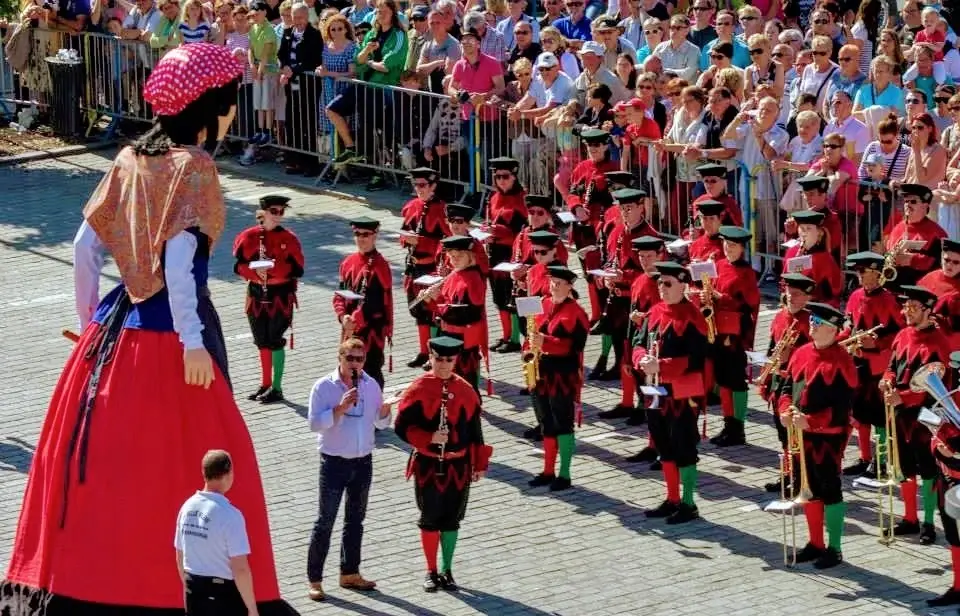
In Steenvoorde, the Philharmonic Society accompanies major carnival events and the processions of the carried giants. In 2015, during the second "Ducasse des Géants portés" (Festival of Carried Giants), the band presented "Belle Hélène"—an original composition by its director, Nicolas Decroix—created to celebrate the giantess's 35th anniversary. Since then, the piece has become her anthem and is played during major festive occasions.
The Giants of the North, symbols of Flemish heritage
The processional giants play a vital role in the identity of the Heart of Flanders. As true ambassadors of Flemish folklore, they represent historical figures, legendary characters or popular symbols that bear witness to the history and identity of the towns and villages of the Heart of Flanders.
A heritage recognised by UNESCO
Since 2005, the processional giants and dragons of Belgium and France have been inscribed on UNESCO’s Representative List of the Intangible Cultural Heritage of Humanity.
In the Heart of Flanders, the Reuze Papa and Reuze Maman of Cassel are the most iconic figures associated with this international recognition. Through these historic Giants, the whole range of Flemish folk traditions is celebrated: carnivals, ducasses, processions, village festivals and gatherings of Giants that keep the folk traditions of French Flanders alive.
The Giants of Cassel have thus become ambassadors for a living heritage that extends far beyond the boundaries of their own municipality. Their fame helps to promote the carnivals of French Flanders, the Mi-Carême in Hazebrouck, the Bailleul Carnival, the Giant gatherings in Steenvoorde and, more broadly, all the folk festivals that keep the spirit of Flemish folklore alive.
Through them, the entire history, sense of community and cultural identity of Flanders continue to shine and be passed on to new generations.
Iconic Giants to discover in French Flanders
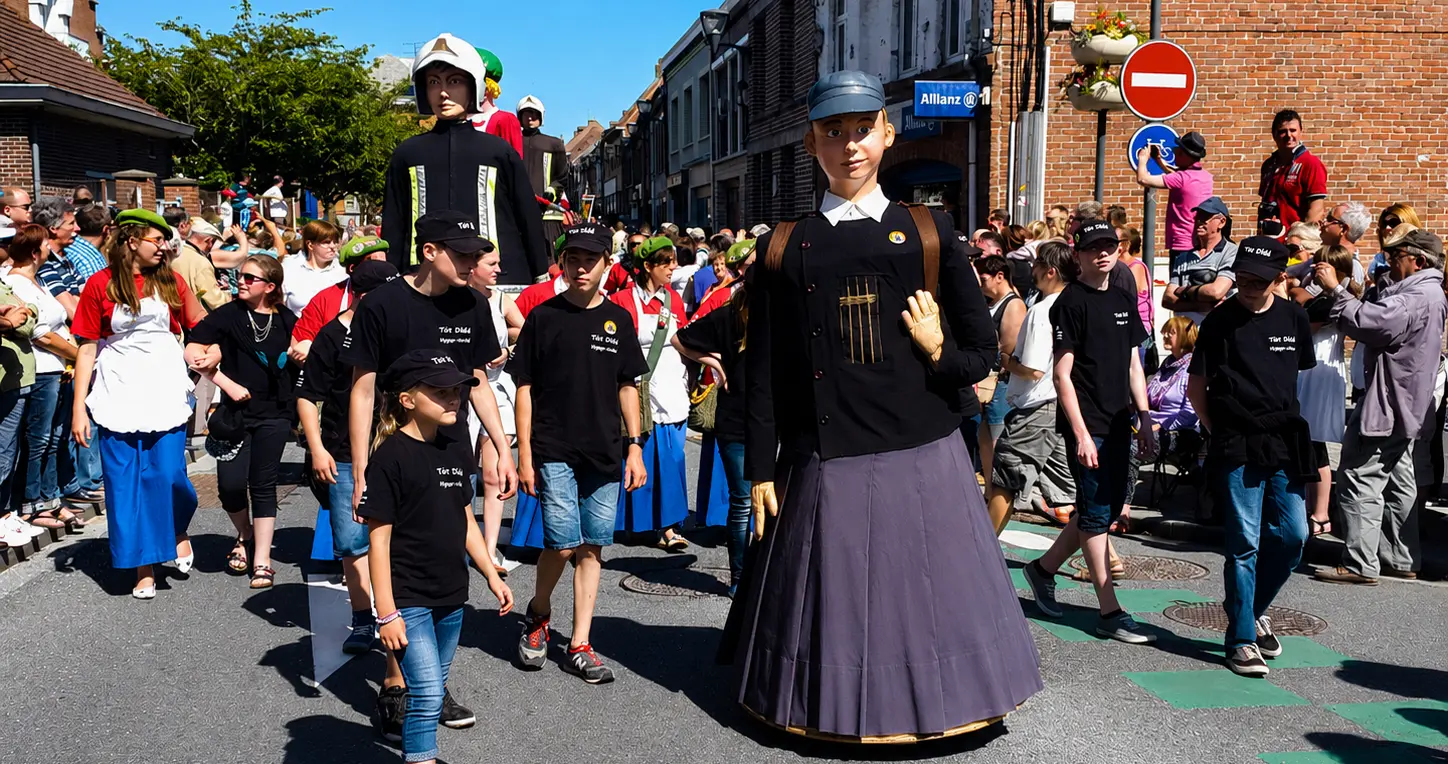
Each Giant has its own story. Carried by passionate volunteers, they take part in carnivals, local festivals and major gatherings that help keep the tradition of the Giants of the North alive.
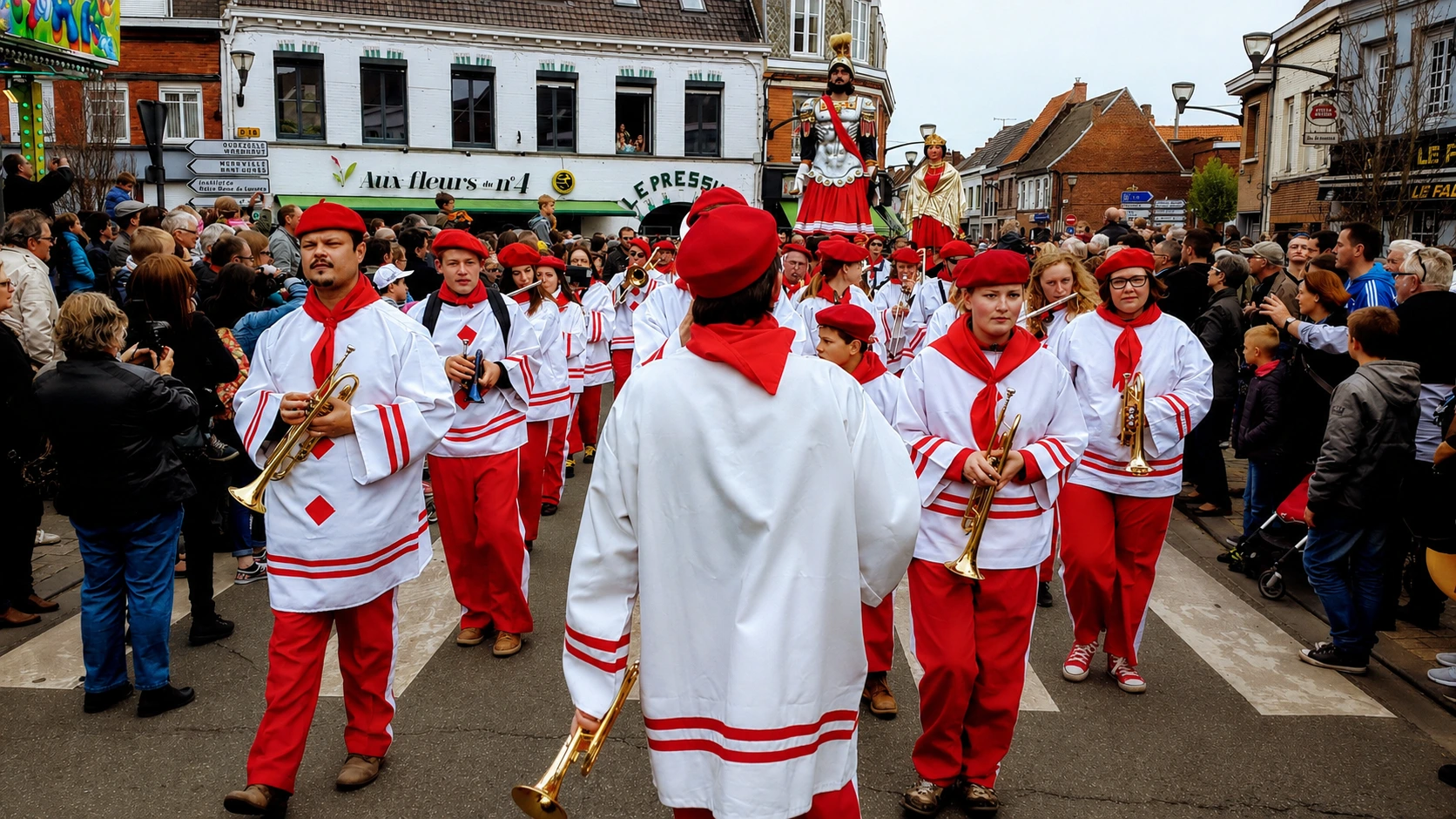
The Cassel Band parades through the streets of Steenvoorde during the 2017 Grand Gathering of Giants. In the background are the famous Reuzes Papa and Maman, iconic figures of the Flemish tradition, accompanied by a large crowd who have come to celebrate the heritage and folklore of Inner Flanders.
The Cassel Carnival and the UNESCO Giants
Among the most renowned carnivals in French Flanders is that of Cassel, dominated by the famous Reuze Papa and Reuze Maman.
Created in 1827 by Ambroise Bafcop, Reuze Papa is today one of the oldest Giants of the North still featured in traditional festivals. Reuze Maman first appeared in 1860 and has accompanied her husband at Cassel’s festivities ever since.
The Reuze: ambassadors of Flemish folklore
Every year, the Cassel Carnival attracts numerous visitors who come to witness the awakening of the Giants, the parades and the entertainment that punctuate the festivities. As true symbols of Cassel, the Reuze help to promote Flemish heritage far beyond the region’s borders.
Hazebrouck’s Mid-Lent, a major folk festival in Flanders
Hazebrouck’s Mid-Lent is one of the oldest festive traditions in the Heart of Flanders. The earliest records of this celebration date back to 1539. After several periods of interruption, the festival was revived in its modern form in 1863, complete with decorated floats, carnival groups and public parades.
A Flemish tradition since 1539
Today, Mid-Lent brings together thousands of spectators every year who come to admire the floats, the musicians, the Giants and the many activities that have made this event, emblematic of Flemish heritage, so famous.
The Bailleul Carnival and the Giant Gargantua
The Bailleul Carnival is one of Flanders’ major festive events. Its modern origins date back to 1853 with the founding of the Bailleul Philanthropic Society by Émile Colpaert, who wanted to organise a major public festival in the heart of the town.
It was also during this period that Gargantua first appeared; he has since become the emblem of the carnival and one of the most famous Giants in French Flanders.
Mardi Gras in Bailleul and carnival traditions
Inspired by the legendary character popularised by François Rabelais, Gargantua takes part in the Shrove Tuesday festivities every year. Accompanied by brass bands, floats and groups in fancy dress, he brings together locals and visitors alike in a festive atmosphere that keeps Flemish carnival traditions alive.
The Steenvoorde Carnival and its grand gatherings of carried Giants
In the heart of French Flanders, Steenvoorde holds a special place in the world of processional Giants. The town is renowned throughout the Hauts-de-France region for its grand gatherings of carried Giants, which welcome iconic figures from across the Hauts-de-France, Belgium and, on occasion, other French or European regions.
The iconic giants of Steenvoorde
La Belle Hélène, created in 1853, is one of the region’s best-known historic giants. Marching alongside her are Jean le Bûcheron, Rosalie du Ryveld, Jacobus, Maria-Mariona and Edgar le Motard, who take part in carnivals, ducasses and major public gatherings.
Steenvoorde, the capital of giant-carrying gatherings
Every year, the Steenvoorde Carnival attracts numerous enthusiasts who come to admire the guest Giants, folk groups and brass bands that bring the town’s streets to life. This event plays an active role in preserving the living heritage of the Giants of the North and Flemish traditions.
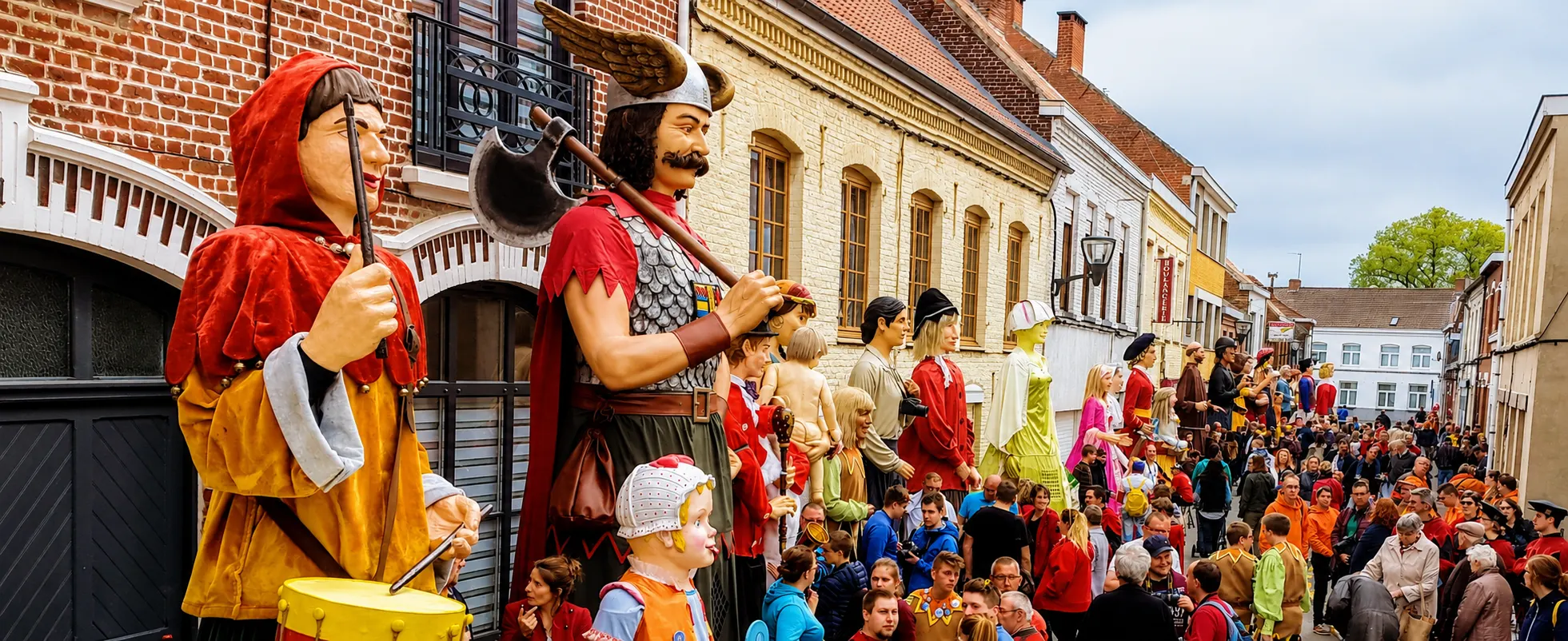
The Giants of the North are far more than just large festive figures; each has its own history, identity, and traditions. Carried by passionate volunteers, they take part in carnivals, popular festivals, and gatherings of Giants every year, helping to preserve and pass on this living cultural heritage.
The other Giants of the Heart of Flanders
In the Heart of Flanders, carried Giants play a vital role in folk traditions. Whilst the Reuze of Cassel, Gargantua in Bailleul and the Giants of Steenvoorde are the best known, many other towns also keep this age-old tradition alive through their own processional Giants. Depicting historical, legendary or local figures, they parade during carnivals, ducasses and Flemish festivals, bringing to life a unique heritage deeply rooted in the history of Flanders.
Far from being old-fashioned, the Giants of the North continue to bring together all generations and remain one of the most vibrant symbols of Flemish folklore.
In Hazebrouck, Tisje Tasje, who represents Jean-Baptiste Vangrevelynghe – a pedlar, poet and champion of Flemish culture – accompanies Toria and Roland of Hazebrouck during the famous Mid-Lent festival. In Nieppe, Miss Cantine symbolises the solidarity of the locals during the Second World War. In Arnèke, Amélie and Lucien, the lovers of Arnèke, along with their son Désiré, embody the village’s living heritage and folk traditions. In Oudezeele, Julia the Canteen Lady and Jeannot the Baker bear witness to the attachment to the trades and characters of yesteryear.
Other municipalities also have their own ambassadors of Flemish folklore, such as Henri the Customs Officer in Godewaersvelde, Jules Boomzaeger in Eecke, Sylvestre the Minstrel in Saint-Sylvestre-Cappel, Agnès and Éloi in Winnezeele, Thomas the Musketeer in Zuytpeene, André the Miller in Houtkerque, and Totor in Steenwerck – one of the largest portable Giants in French Flanders, standing 5.70 metres tall. Each of these portable Giants tells a part of the local history and helps to keep the traditions of Flanders alive during carnivals, ducasses and Giant gatherings organised throughout the year.
As true symbols of Flemish popular culture, these iconic figures reinforce the identity of the Heart of Flanders and invite visitors to discover the richness of Flemish folklore through its festivals, music, costumes and centuries-old traditions. Through the carried Giants of the Heart of Flanders, the very soul of Flanders continues to parade to the rhythm of traditional festivals.
What is there to see in the Heart of Flanders during the carnivals?
The carnivals also offer an opportunity to discover the region’s treasures: Flemish villages, traditional taverns, culinary specialities, museums and landscapes typical of Flanders.
Between Cassel, Hazebrouck, Bailleul and Steenvoorde, the Heart of Flanders offers a unique immersion in Flemish culture and the folk traditions of the Hauts-de-France region.
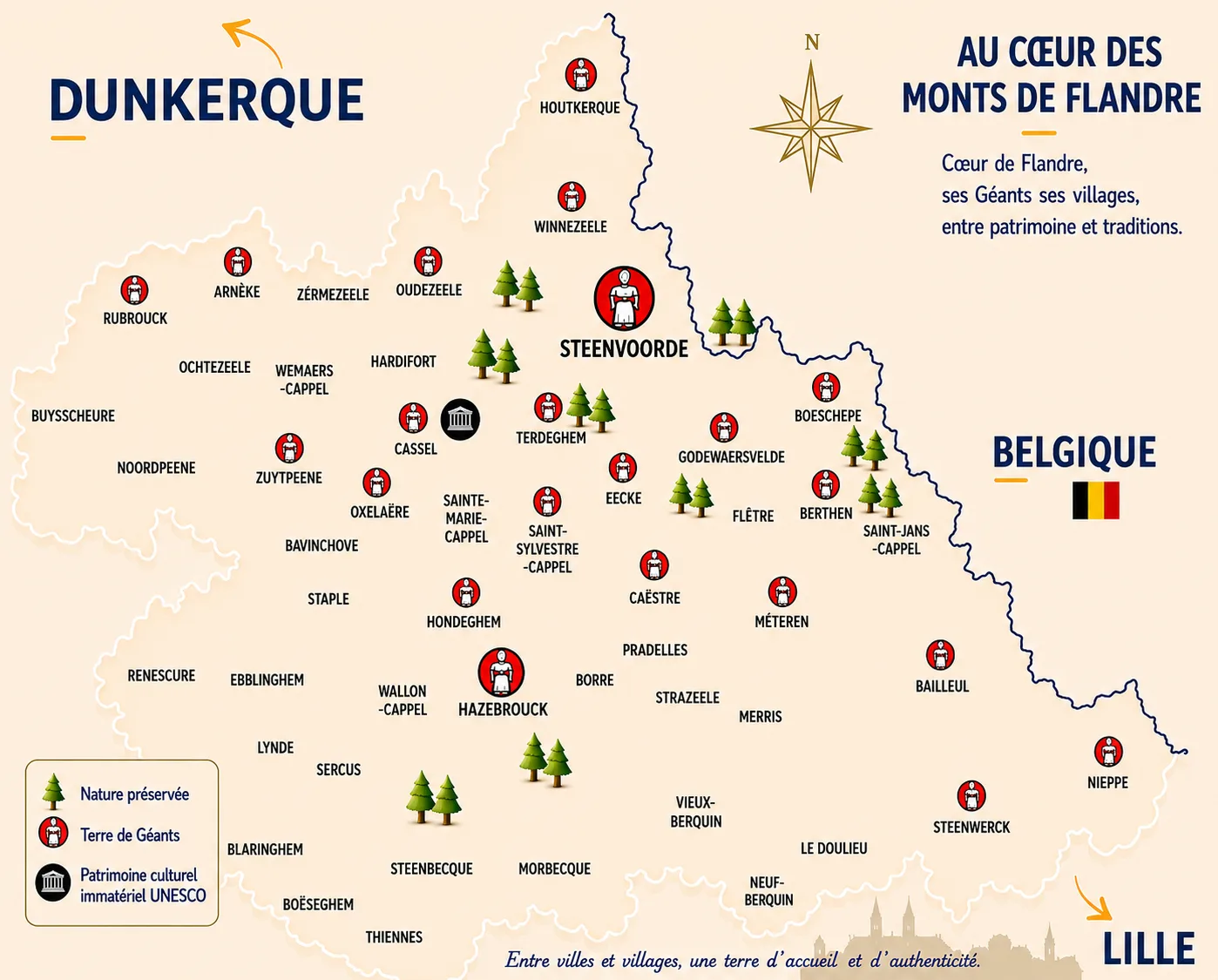
Experience the Giants and carnivals of the Heart of Flanders
From the Reuze of Cassel to Gargantua of Bailleul, from Hazebrouck’s Mi-Carême to the Giants of Steenvoorde, the carnivals of the Heart of Flanders are one of the finest festive traditions in the Hauts-de-France region.
During carnival season, the Heart of Flanders reveals the full richness of its living heritage. These folk festivals invite visitors to discover the soul of French Flanders through its Giants, traditions, folklore, music and way of life.
Where can you see the Giants at the carnival in the Cœur de Flandre?
To discover the Giants of Flanders, head to the Steenvoorde Carnival on 24 and 25 April 2027. This unmissable event in the Cœur de Flandre celebrates Flemish traditions through parades of Giants, brass bands and festive entertainment in the heart of French Flanders.
Also worth discovering
Browse the archives of the Steenvoorde Summer Carnival and discover the programmes, guest Giants and grand processions since 2004.

A website dedicated to the Giants of Steenvoorde, their history, their associations and the Summer Carnival.
© 2023 / 2026 – Steenvoorde and its Giants
Legal notices: Website hosted by planethoster.fr
Design: Pascal Cnockaert
Documentation and archives
The information presented on this website is based on public archives, historical publications, press articles, photographic collections, oral accounts and heritage resources relating to the history of Steenvoorde, its giants and its carnival.
Traduction automatique Deepl