
History of the Steenvoorde Carnival: from the Mid-Lent festivities to today’s Carnival
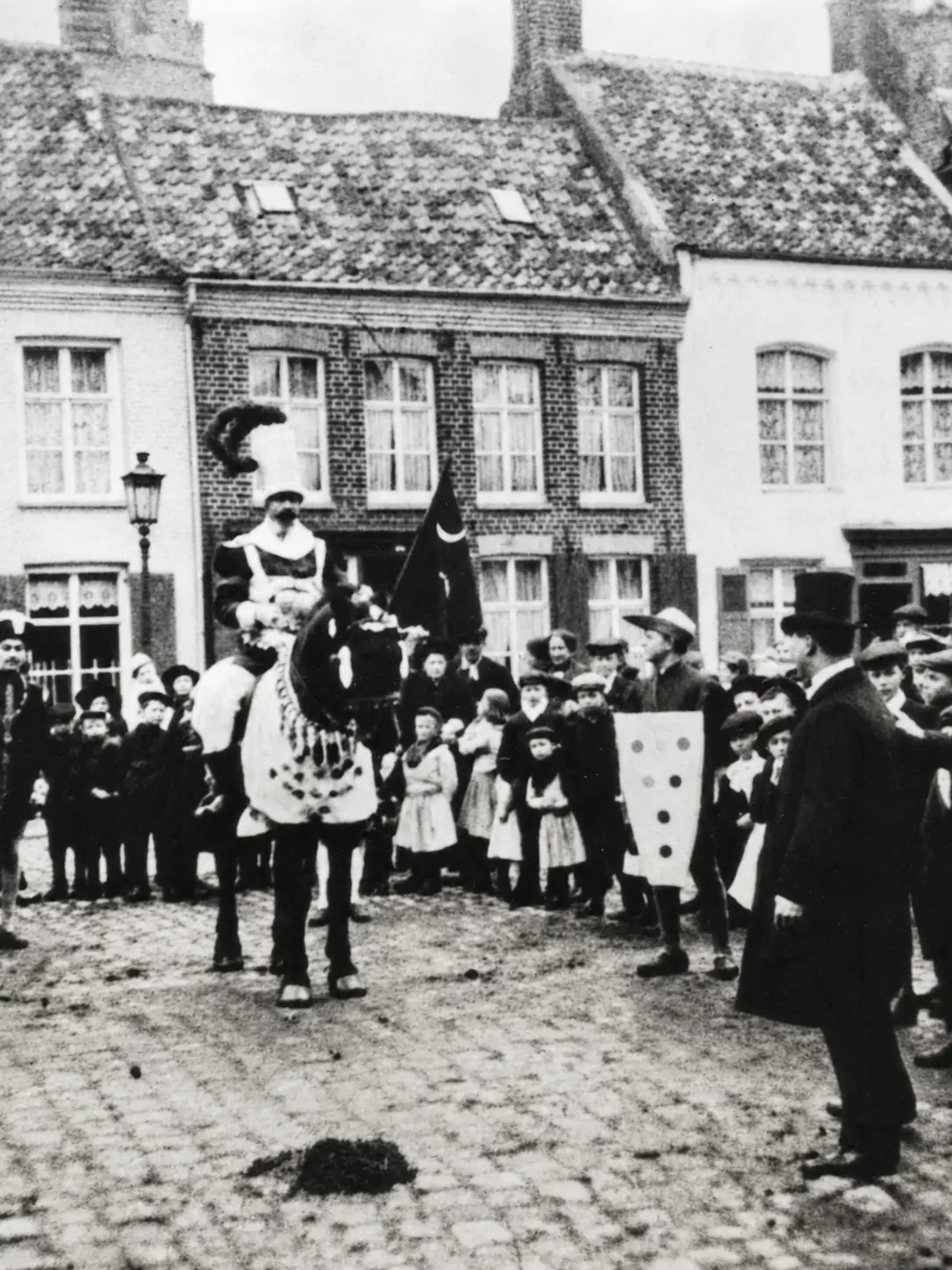
On the Sunday morning of Mid-Lent, Lord Fromulus, on horseback, would go to greet the Reuze of Steinfort at its home.
From Mid-Lent Festivities to the First Grand Parade
In the 19th century, Mid-Lent festivities in Steenvoorde featured processions, floats and popular theatrical scenes that played an important role in local life.
In 1851, eleven groups and floats paraded through the streets of the town. The procession included hunters accompanied by costumed beaters, sounding trumpets and a pack of hounds; an inn scene entitled « ’t Pannekoek Huis »; and a group of Arabs on horseback.
The following year, twelve groups took to the streets, five of them on horseback. In 1853, La Belle Hélène made her first appearance at these festivities, marking the beginning of a story that would become firmly rooted in local memory.
In 1864, a float carried the « distinguished artists of Steenvoorde », who performed a pantomime entitled Jocrisse Dienst.
Five years later, in 1869, the Société Philharmonique took part in the procession wearing Greek costumes. The programme for that year lists Louis Verbèke as president and Édouard Serlooten as vice-president. The parade also featured a float depicting the wedding of a Chinese mandarin.
In 1882, the festivities saw a technical innovation: the Dubar company, based in Lille, installed electric lighting on the Grand-Place for the celebration.
In 1893, the procession stood out for the variety of its scenes, bringing together drums and bugles, the Cambrinus float, a group of Armenians and the float of the Marquis of Carabas. The Shrove Tuesday festivities concluded with the solemn return of La Belle Hélène.
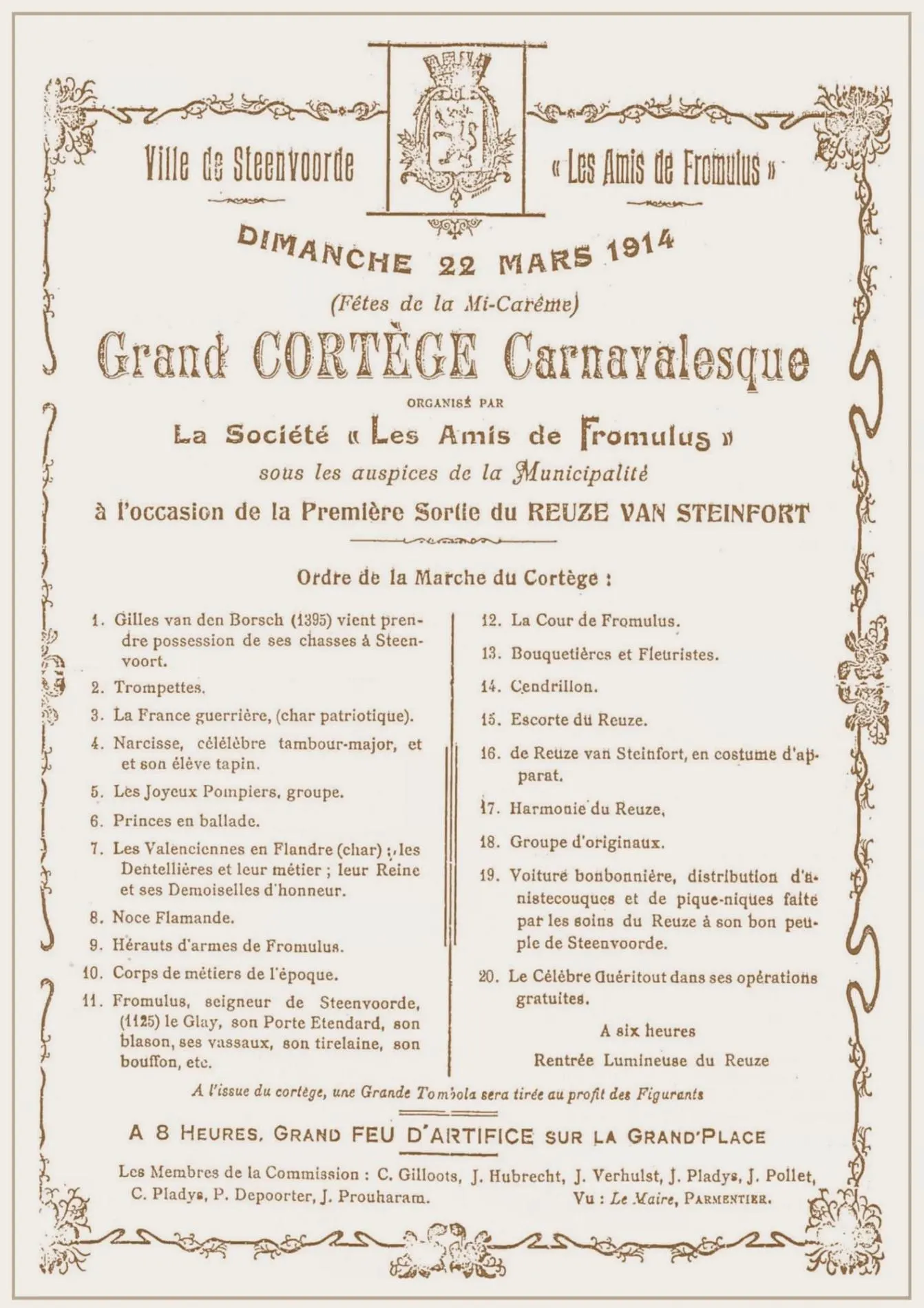
Continuing this carnival tradition, the Amis de Fromulus organised their first major procession for Mid-Lent. On 22 March 1914, the Reuze van Steinfort made his first official appearance at the event. This date marks an important milestone in the history of the local carnival and in the development of a tradition that continues to contribute to the renown of the Carnival of Steenvoorde today.
22 March 1914: the first Grand Carnival Procession
Composition of the procession: 1. Gilles van den Borsch (1395) comes to take possession of his hunting grounds in Steenvoort – 2. Trumpets – 3. ‘Warrior France’ (patriotic float) – 4. Narcisse, the famous drum-major, and his apprentice drummer – 5. The Merry Firemen, a group – 6. Princes out for a stroll – 7. The Women of Valenciennes in Flanders (float); the lace-makers and their craft; their Queen and her Maids of Honour – 8. Flemish wedding – 9. Fromulus’s heralds – 10. Trades of the era – 11. Fromulus, Lord of Steenvoorde (1125), Le Glay, his Standard-Bearer, his coat of arms, his vassals, his squire, his jester, etc. – 12. The Court of Fromulus – 13. Flower Girls and Florists – 14. Cinderella – 15. The Reuze’s Escort – 16. of the Reuze van Steinfort, in ceremonial dress – 17. The Reuze’s brass band – 18. A group of eccentrics – 19. The sweet-filled carriage, with aniseed biscuits and picnics distributed by the Reuze to his good people of Steenvoorde – 20. The famous ‘Guéritout’ performing his free treatments.
Programme for the 1914 carnival procession.
A few years later, the grand carnival procession was moved to the last Sunday in April in order to benefit from more favourable weather conditions.
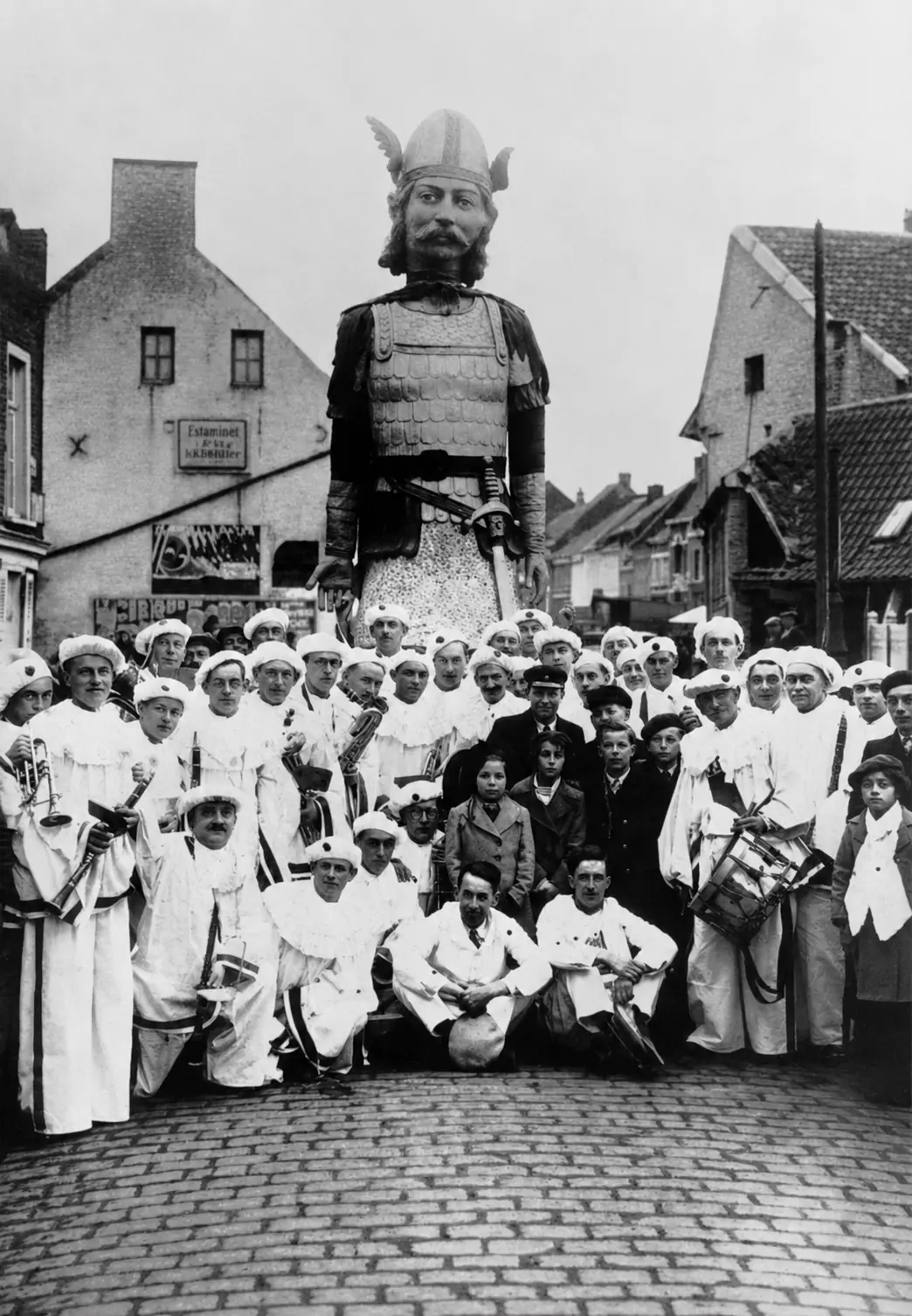
The Reuze van Steinfort, a figure in the procession from 1914 to 1940
(*1) “The festival took place on Mid-Lent Sunday. We fondly recall the ‘Pannekoucke hus’ – the pancake float – the Queen’s Float, and a dozen ladies in regional costume, wearing piped bonnets, shawls with large floral patterns and long skirts, holding lace doilies between their knees. This was the era when this beautiful lace, known as ‘Valenciennes’, was made; merchants used to buy it by the aune, and today it is scarcely to be found anywhere except at the lace-making school in Bailleul...
Bad weather and the cold are always a hindrance to a street festival, so it was decided to postpone the event until the last Sunday in April.
Following the success achieved in Steenvoorde, Ypres, Poperinghe, Hazebrouck and elsewhere organised similar festivals. Some wonderful groups were formed there and, invited by our Committee, paraded through our streets, cheered on by hundreds of people…
For some years now, thanks to the generosity of our local councillors and residents, the ‘Friends of Fromulus’ have been able to call upon French, Belgian and Dutch societies, which compete with one another in enthusiasm and cheerfulness, to the great delight of the local population and the great benefit of local trade.”
(*1) Extract from the Official Municipal Bulletin of 1964
The Summer Carnival, a popular festival in Steenvoorde
In 1959, the event officially took the name ‘Summer Carnival’, marking a new chapter in its history. In 1970, the Official Municipal Bulletin highlighted the success of the Summer Carnival organised by the Friends of Fromulus, reflecting the growing importance of this festival in the life of Steenvoorde.
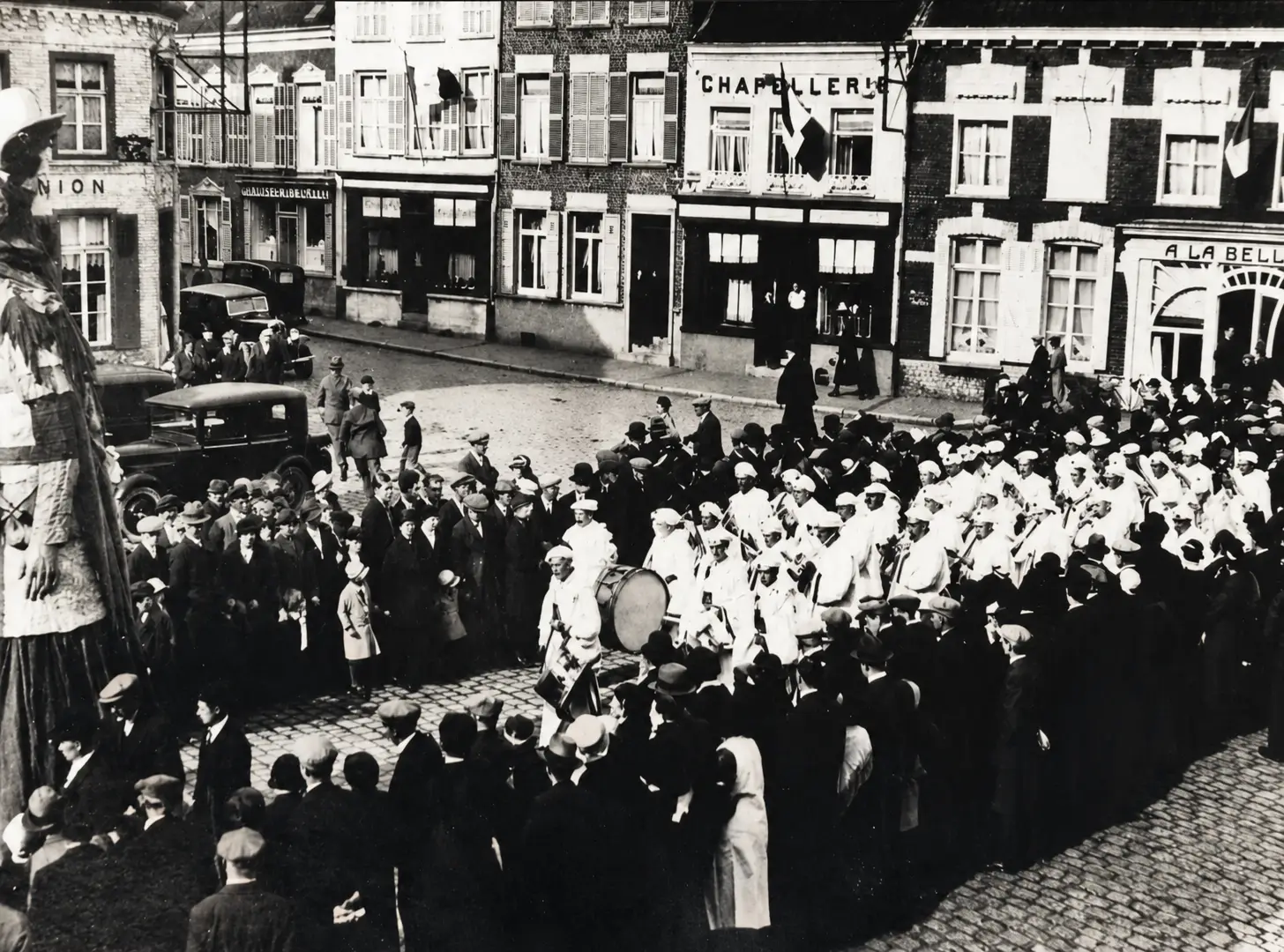
Music from Steenvoorde in the 1930s
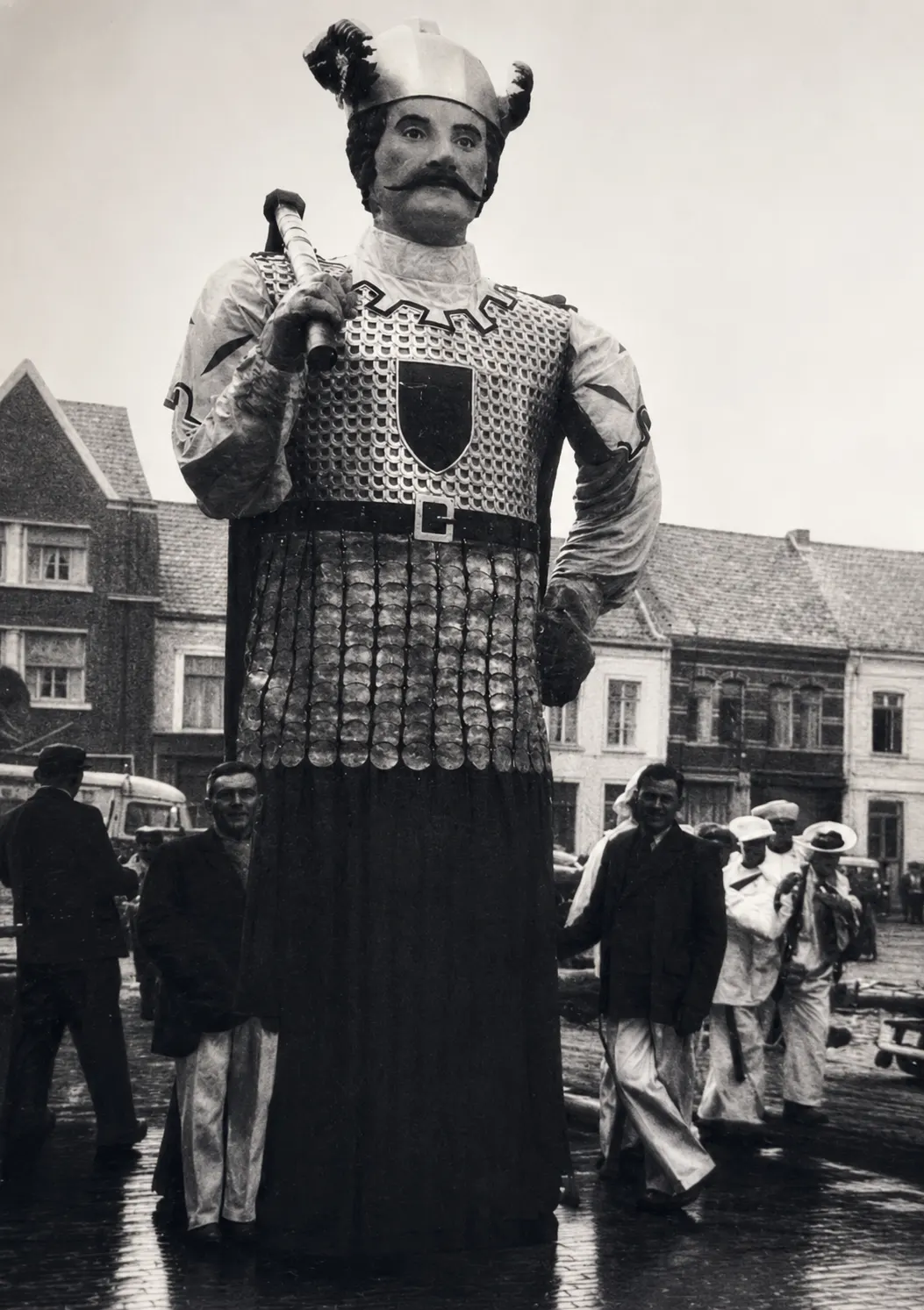
Jean the Woodcutter II – Photo from the 1964 municipal magazine.
" The 1969 Summer Carnival was certainly of a high standard: it was colourful, varied, joyful and featured the full range of groups one would hope to find in a parade worthy of the name; but its greatest quality was undoubtedly that it was distinctly Steenvoorde. Of all the parades in the former Hazebrouck district, it was undoubtedly the one in Steenvoorde that featured the largest number of local groups: the most illustrious of the Steenvoorde locals, Jean the Woodcutter, was, as usual, escorted by the Musique des Pierrots to lead the way. Behind him were large Nice-style heads carried on the shoulders of people from Steenvoorde. The groups from the Maison des Jeunes were warmly applauded for their originality.
The Troika, pulled by an Oudezelle donkey, was magnificent, and the girls from the Ukrainian wedding, all dressed in purple, were wildly cheerful. Bermuda shorts, already well known in the region, were a well-deserved hit, as were the baroque bicycles, which engaged in mad races all along the route taken by the procession. But it was undoubtedly the ‘Flemish-style (election) campaign’ that proved the biggest hit: the young campaigners were calling for ‘bread, wine… and “shadocks”’, and displaying the ‘ballot’ materials (a large bale of straw, etc.), a real carnival!
The rest of the procession was made up of local groups: the graceful majorettes from Grand-Fort-Philippe in blue and white, the Polish group from Waziers with their colourful music, and the Limousin dancers from Strazeele, who were a resounding success. The Belgians had turned out in force.
As for the majorettes from Blankenberghe, ‘they’ danced until they were out of breath, just like their compatriots, the Gilles of Warneton.
All in all, it was an excellent procession, which was applauded by a large and jubilant crowd: they gave a special ovation to the Queen of Flowers and her Maids of Honour, who were seated in two carriages decorated with great taste."
Jean the Woodcutter and the major Carnival events
In 1979, the grand parade organised to mark the 65th anniversary of Jean the Woodcutter welcomed a special guest: Jean Turpin from Nieuwpoort, then recognised as Europe’s tallest carried giant.
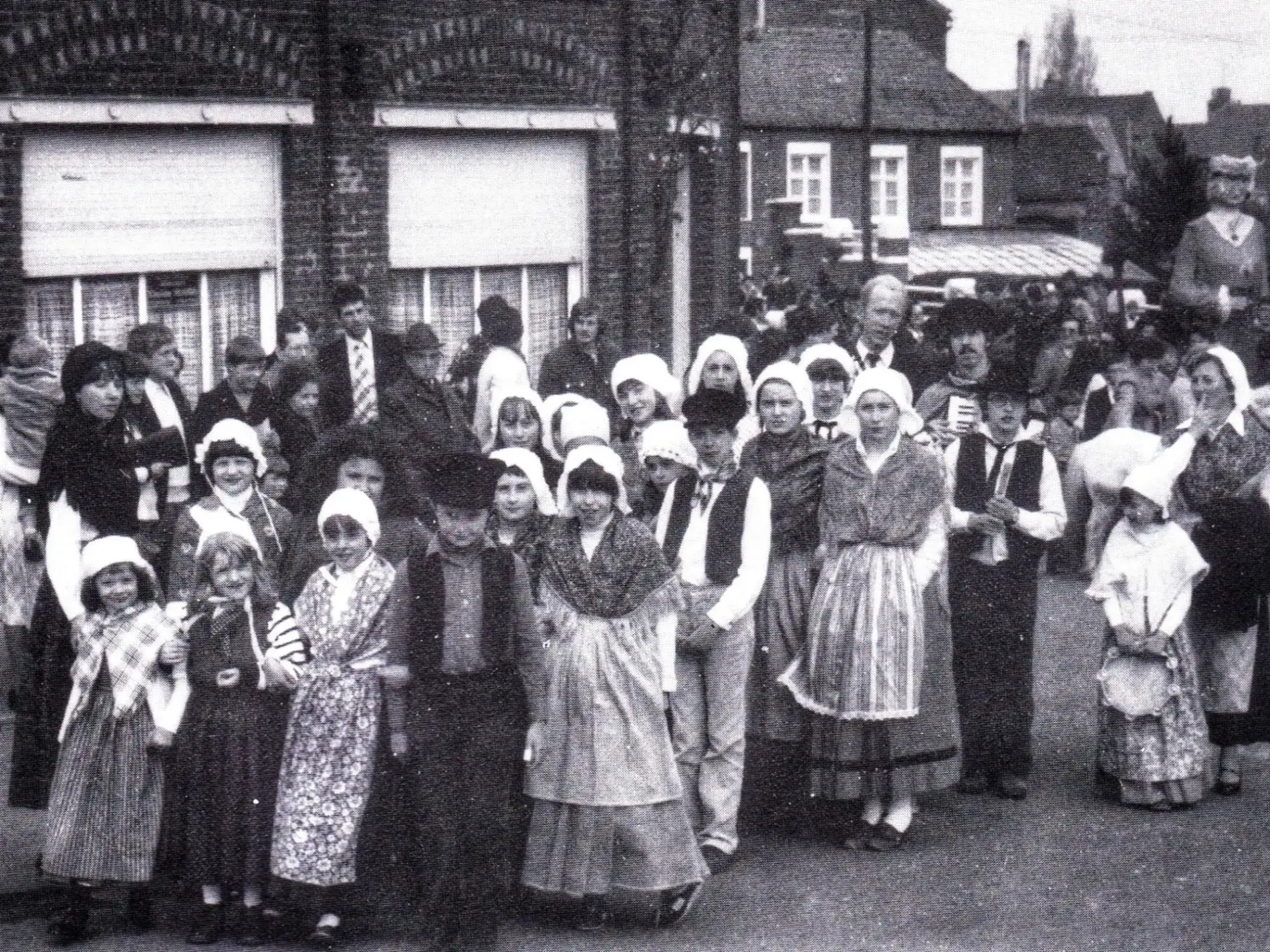
Flemish group, the Sprinkhaanders Steenvoorde - 1979
1989: the birth of the European Tour of Carried Giants
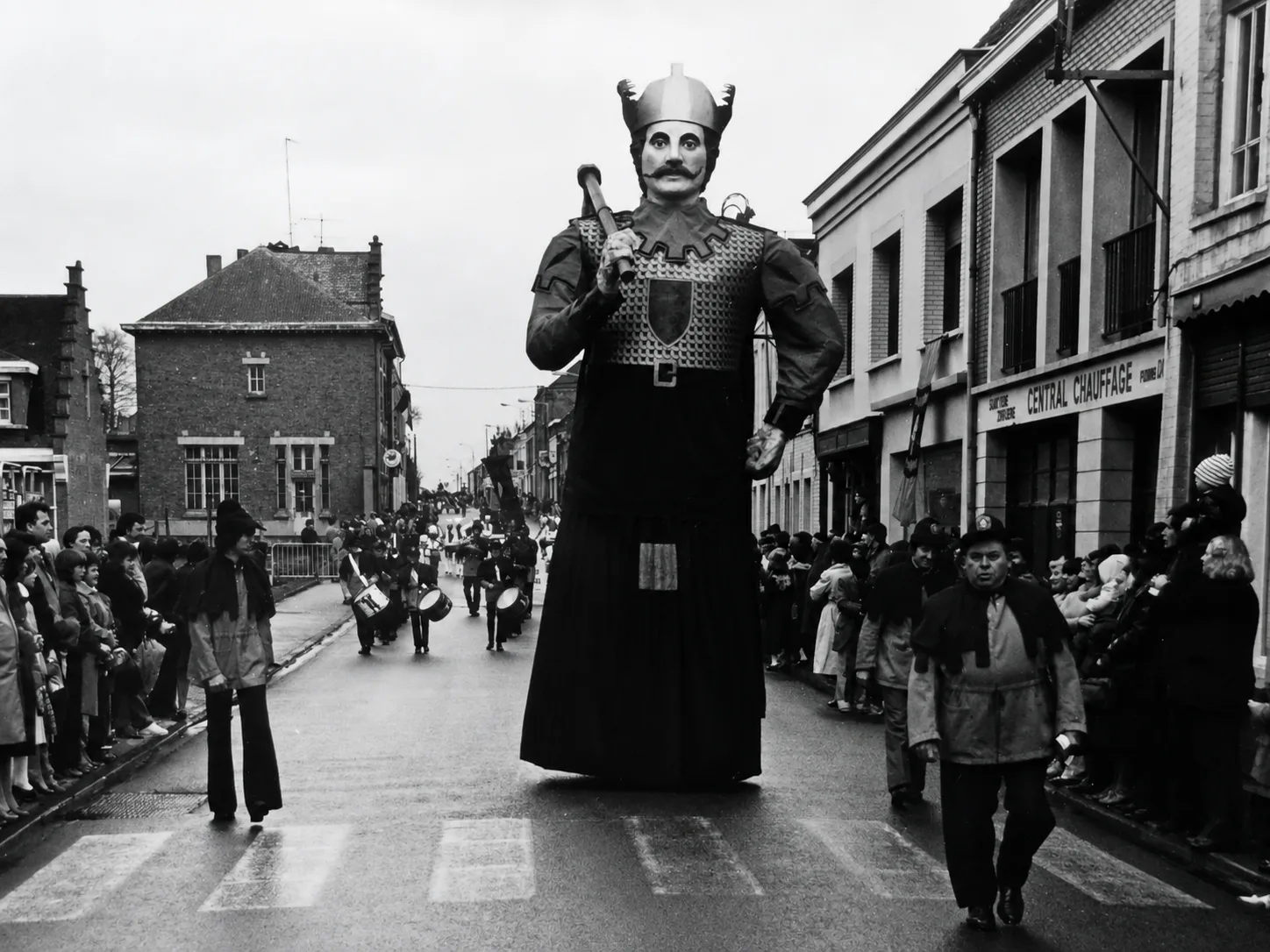
In 1989, to mark the 75th anniversary of Jean le Bûcheron, the Friends of Fromulus organised the first European Parade of Carried Giants. Exceptionally, this major event replaced the traditional Summer Carnival.
The International Summer Carnival: Steenvoorde opens up to Europe
In 1995, the event took on a new dimension and became the ‘International Summer Carnival’, to reflect the growing presence of folk groups, brass bands and delegations from several European countries.
At the 1996 International Summer Carnival, the procession comprised 20 groups: 7 from Steenvoorde, 2 from Renescure and Godewaersvelde, 5 from Belgium, and 3 each from the Netherlands, Denmark and Peru.
A tradition recognised as intangible cultural heritage

In 2013, the Steenvoorde Carnival and its giants were added to France’s Inventory of Intangible Cultural Heritage, thereby recognising the importance of this popular tradition within the living heritage of the Hauts-de-France region.
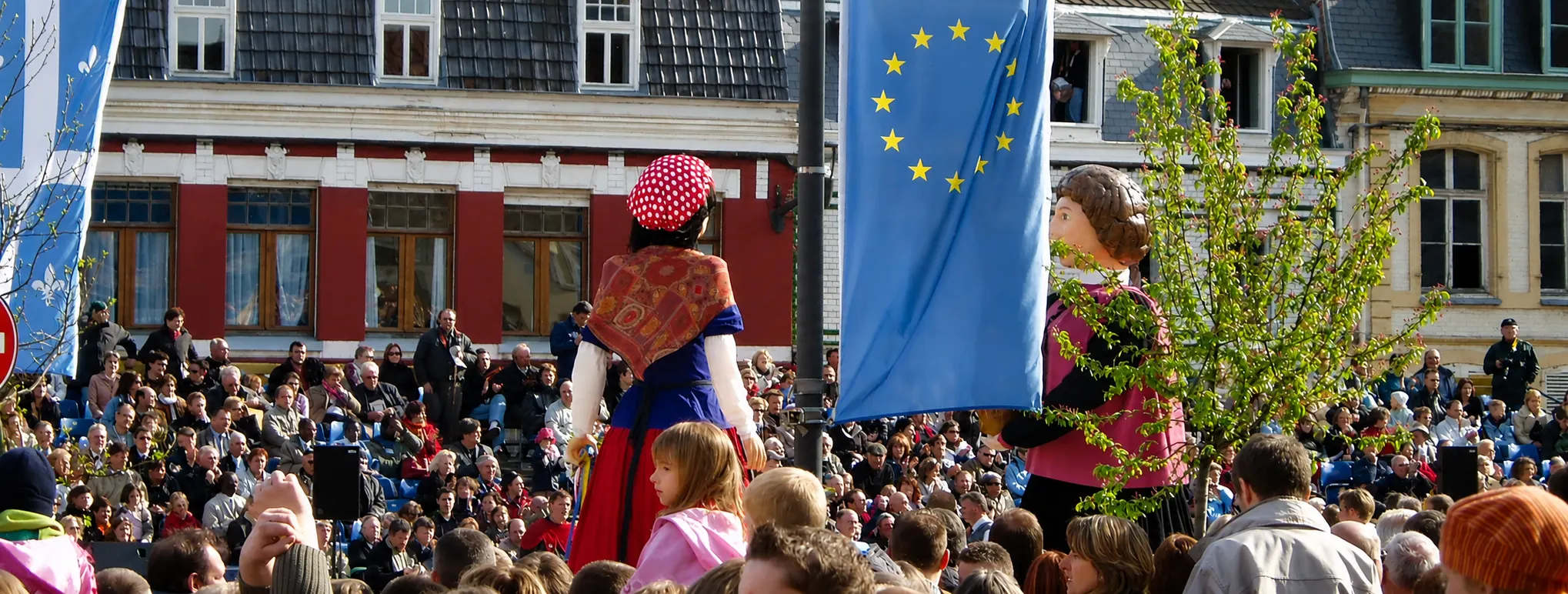
Continue your exploration
The Steenvoorde Carnival is part of a long-standing popular tradition upheld by local associations, the giant-bearers and the town’s residents. Continue your exploration with the Steenvoorde Carnival, the Giants of Steenvoorde, the Friends of Fromulus, the Friends of Gambrinus and the Steenvoorde Carnival Archives dating back to 2003. To better understand the origins of this tradition, discoverthe History of Steenvoorde as well.

A website dedicated to the Giants of Steenvoorde, their history, their associations and the Summer Carnival.
© 2023 / 2026 – Steenvoorde and its Giants
Legal notices: Website hosted by planethoster.fr
Design: Pascal Cnockaert
Documentation and archives
The information presented on this website is based on public archives, historical publications, press articles, photographic collections, oral accounts and heritage resources relating to the history of Steenvoorde, its giants and its carnival.
Traduction automatique Deepl