
Visiting Steenvoorde: in the heart of the Monts de Flandre and Flemish traditions
Nestled in the heart of French Flanders, between Lille, Dunkirk and the Belgian border, Steenvoorde is an authentic destination where heritage, nature and folk traditions come together. Renowned for its Giants of the North, its carnival, its windmills and its rich Flemish heritage, the town appeals to visitors seeking a distinctive holiday experience in the Hauts-de-France region.
Surrounded by the iconic landscapes of the Monts de Flandre, Steenvoorde is an ideal base from which to explore the region’s natural, cultural and historical treasures. With its charming villages, fortified towns, walking trails and Flemish cuisine, every visit promises wonderful discoveries.
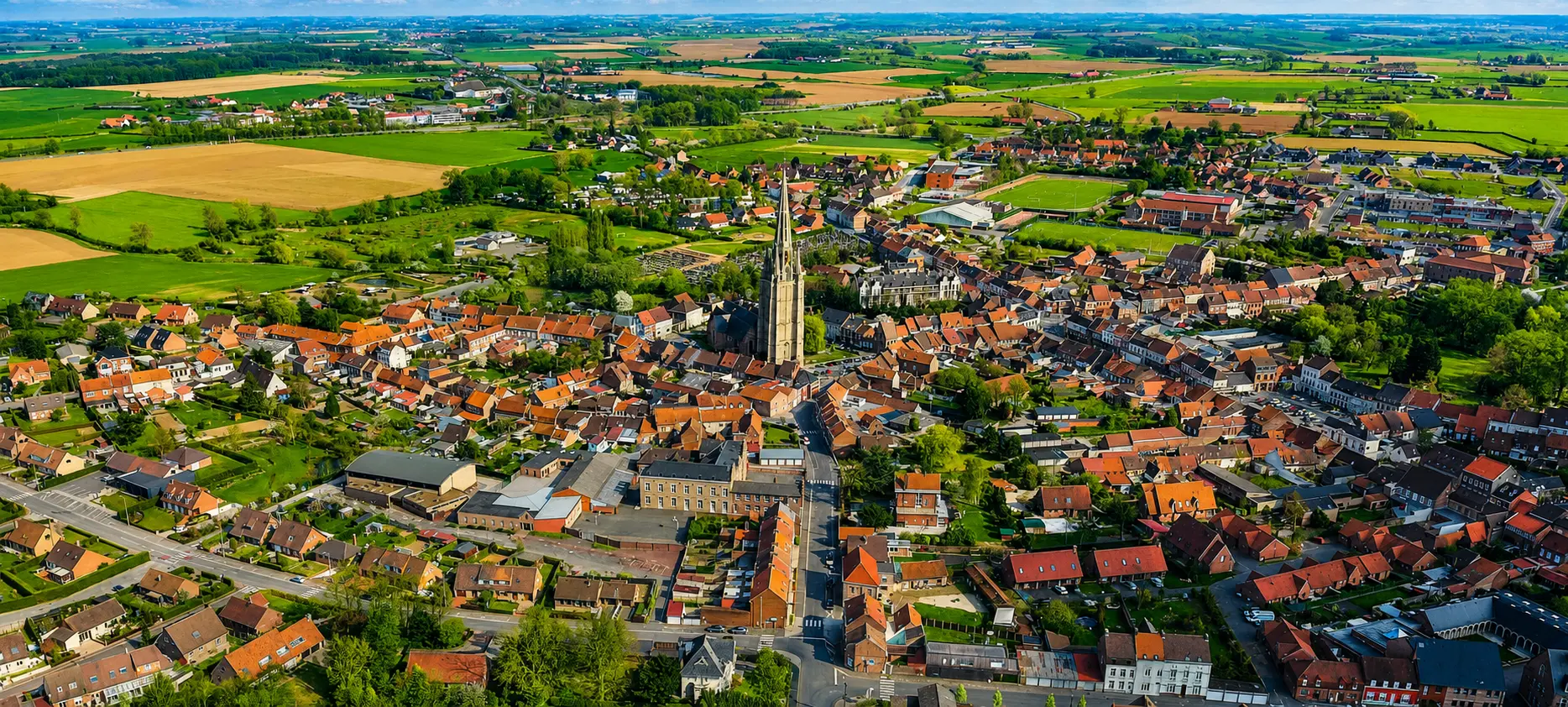
Discover Steenvoorde from the air – a charming village in French Flanders renowned for its Giants of the North, its traditional carnival and its rich Flemish cultural heritage.
Steenvoorde’s must-sees
The Flemish windmills
True symbols of the local heritage, Steenvoorde’s windmills bear witness to Flanders’ agricultural past. The Drievenmeulen and the Noordmeulen are among the town’s most iconic landmarks. Their distinctive silhouettes are a typical feature of the Flemish landscape and attract numerous visitors and photographers every year.
The Drievenmeulen and the Noordmeulen: Steenvoorde’s iconic windmills
The Noordmeulen, on which the date 1576 was discovered on a beam during its restoration, is one of the oldest surviving windmills in French Flanders. Listed as a Historic Monument since 1977, it stands as a remarkable testament to the craftsmanship of Flemish millers and the importance of milling in the rural economy of days gone by.
Built in Somain in 1776 as an oil mill, then relocated to Steenvoorde in 1901 where it was converted into a flour mill, the Drievenmeulen completes this exceptional heritage complex. This wooden post mill illustrates the ingenuity of traditional techniques and serves as a reminder of the vital role played by mills in the processing of agricultural produce.
Together, these two buildings keep alive the memory of a milling heritage stretching back several centuries. As true symbols of the Flemish landscape, they bear witness to the region’s economic, technical and cultural history and help to preserve Steenvoorde’s historical identity.
St Peter’s Church: the stone giant of Steenvoorde
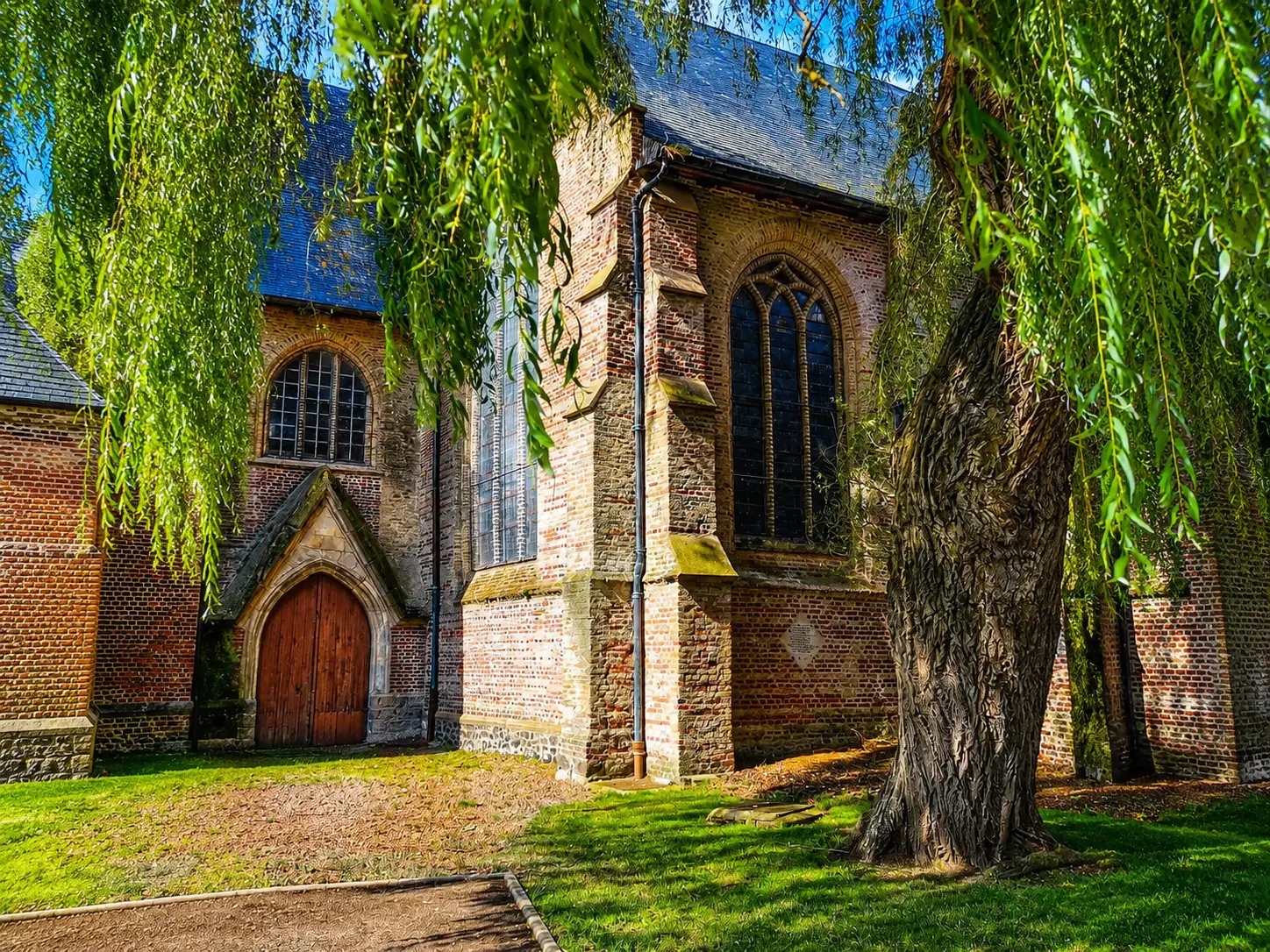
A view of the exterior of Saint-Pierre Church in Steenvoorde, an iconic monument of religious heritage in the Heart of Flanders.
Towering over the Flemish plain with its bell tower standing nearly 92 metres high, Saint Peter’s Church has been a defining feature of Steenvoorde’s landscape for centuries.
Built of brick in the tradition of Flemish hall churches, it features three naves of equal height, a vast transept and a three-sided chancel. Its interior retains an elegant panelled barrel vault adorned with finely carved keystones. In the chancel, the high altar is set off by three stained-glass windows depicting various episodes from the life of the Apostle Peter.
The church also houses a bronze bell cast in Valenciennes in 1710. A valuable testament to Flemish bell-making heritage, it has accompanied the religious and civic life of the town for over three centuries. This bell has been listed as a Historic Monument since 1979.
With its architecture and rich décor, Saint-Pierre Church stands as one of the principal examples of the religious heritage of the Cœur de Flandre. A true landmark in the landscape of the Cœur de Flandre, Saint-Pierre Church is an unmissable stop for lovers of heritage and sacred art.
From the ‘Au Coq’ house to the Market Hall: Flemish heritage at the heart of Steenvoorde
The heart of Steenvoorde invites you to stroll amongst Flemish heritage and a warm, welcoming atmosphere. Among the town’s architectural treasures is the ‘Au Coq’ house, a former vicarage dating from 1664, recognisable by its façades, which are listed as Historic Monuments, and its architecture typical of 17th-century Flemish houses.
Having served as a tavern and then a hosiery shop over the years, it bears witness to Steenvoorde’s religious, commercial and artisanal history.
Just a short walk away, the Halle Marchande brings the town centre to life with its weekly market and numerous events. Inspired by traditional Flemish architecture, its timber frame and gabled roof make it a popular meeting place for locals and visitors alike.
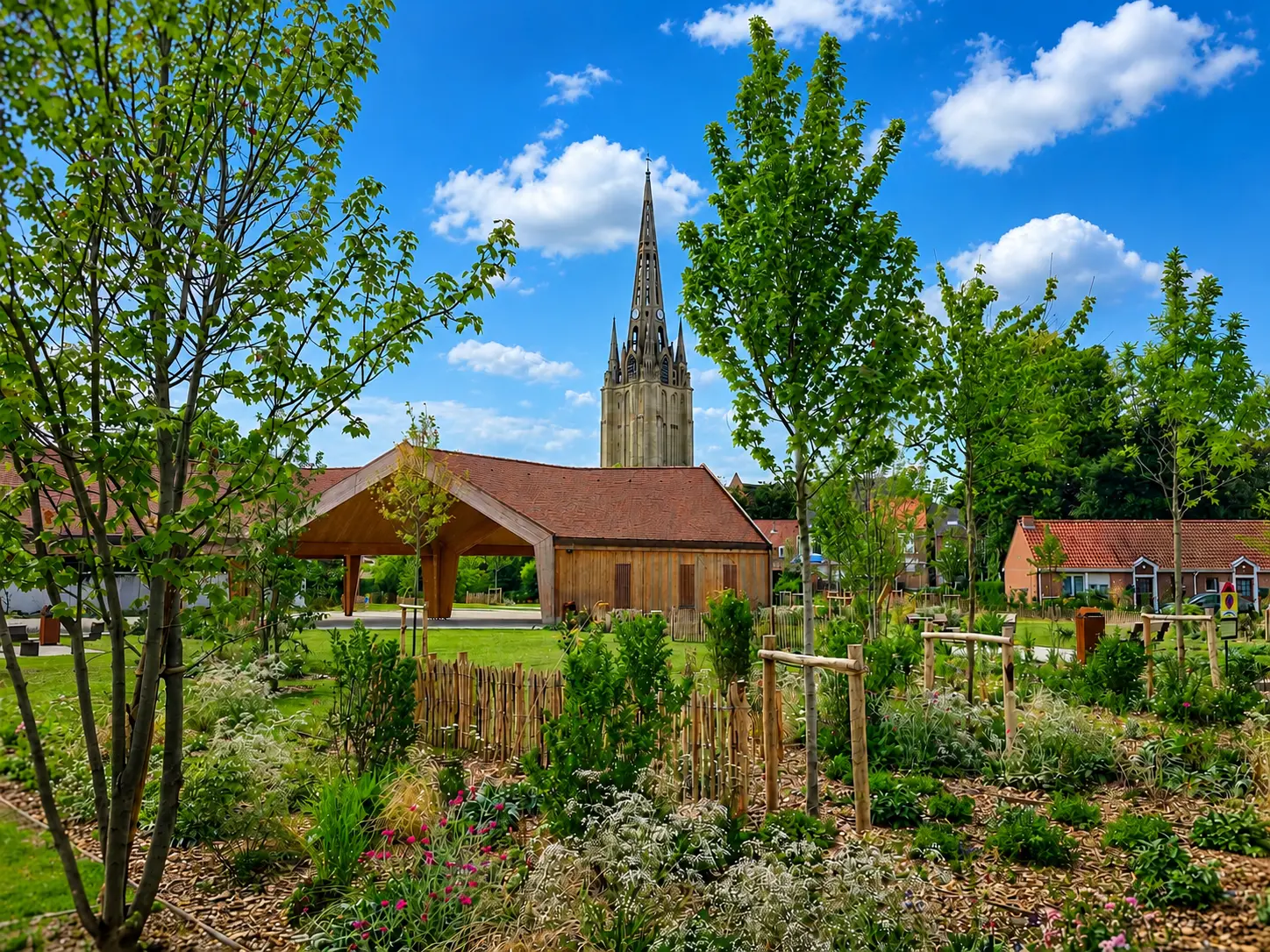
The Halle Marchande in Steenvoorde: a new hub of activity in the historic centre, blending Flemish heritage with a warm, welcoming atmosphere.
The Giants of Steenvoorde and the carnival
It is impossible to mention Steenvoorde without talking about its famous portable Giants. Jean the Woodcutter, Maria-Mariona, Jacobus, Belle Hélène, Rosalie the Milkmaid and Edgar the Biker embody the town’s festive spirit. Every year, during the carnival held on the last Sunday in April, the streets come alive with a convivial atmosphere that keeps alive one of the finest traditions of French Flanders.
Traditional Flemish games: a living heritage
Traditional Flemish games are an important part of Steenvoorde's cultural heritage. Passed down through generations, these popular traditions continue to bring local people together while offering visitors an authentic glimpse into the friendly spirit of French Flanders.
Among them, vertical pole archery is one of the region's most emblematic traditions. Still featured during competitions and local festivities, it is preserved by the Saint Sebastian Society, founded in 1811, which has been safeguarding this living heritage for more than two centuries.
Another highlight is Flemish bowling, a traditional game that regularly brings together enthusiasts, residents and visitors in a friendly atmosphere. Supported by local associations, it can be played all year round thanks to the indoor bowling alley located on Rue de Verdun.
The Boule Flamande Steenvoordoise association meets at the indoor bowling alley, behind the Maison de Flandre, every Tuesday, Thursday and Saturday. Weather permitting, games are also held on Thursdays at the "Marcel Baret" outdoor bowling alley, opposite the Town Hall.
Whether you are an experienced player or simply curious to discover a local tradition, these gatherings provide a wonderful opportunity to enjoy a friendly atmosphere, meet local enthusiasts and experience one of the most distinctive traditions of French Flanders. More than just a game, Flemish bowling remains a living symbol of Steenvoorde's heritage and local identity.
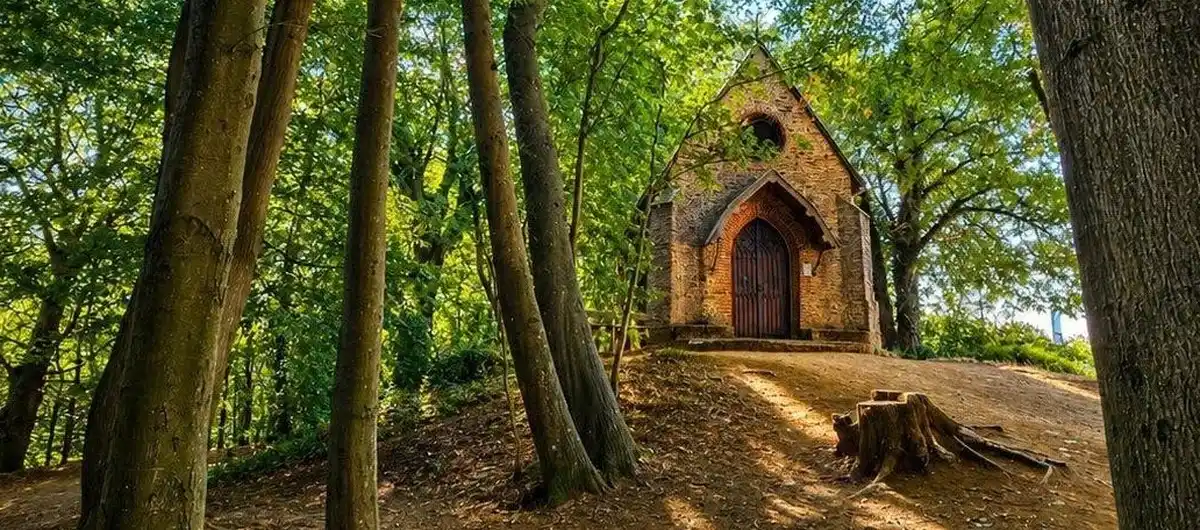
What is there to visit around Steenvoorde?
Cassel, one of the ‘Most Beautiful Villages in France’
Just a few minutes from Steenvoorde, Cassel overlooks the Monts de Flandre and offers exceptional panoramic views across the entire region. Listed as one of the Most Beautiful Villages in France, this Flemish village charms visitors with its heritage, picturesque narrow streets, traditional taverns and the Musée de Flandre, dedicated to Flemish history and culture.
The Flanders Hills and Mont des Cats
Nature lovers will appreciate the rolling landscapes of the Flanders Hills. Mont Cassel, Mont Noir, Mont Rouge and Mont des Cats offer magnificent hiking trails and outstanding panoramic views. Mont des Cats is also renowned for its Trappist Abbey, its famous cheese and its peaceful atmosphere, making it an ideal place for relaxation and contemplation.
Terdeghem and Its Windmills
Just a few kilometres from Steenvoorde, Terdeghem is a charming village set in the heart of the Flemish countryside. Its Saint Martin's Church, remarkable for its Neo-Gothic architecture, houses beautiful historic gravestones and a museum area dedicated to the local heritage. The traditional Flemish houses lining the village streets reflect its distinctive architectural character. Terdeghem is also well known for its two windmills: the Steenmeulen, listed as a Historic Monument, and the Roome Windmill (Moulin de la Roome).
Saint-Sylvestre-Cappel and the 3 Monts Brewery
Located in Saint-Sylvestre-Cappel, in the heart of the Flanders Hills, the Saint-Sylvestre Brewery is the birthplace of the famous 3 Monts beer. Visitors can discover the family history of this iconic brewery, learn about the different stages of the brewing process and finish the tour with a tasting session. The brewery shop also offers the opportunity to take home its beers and regional specialities, produced by a brewery renowned throughout French Flanders.
Godewaersvelde and the Museum of Border Life
Nestled at the foot of Mont des Cats, Godewaersvelde is an authentic Flemish village renowned for its traditional estaminets and rich heritage. Its Museum of Border Life tells the story of customs officers, smugglers and everyday life along the French-Belgian border. Through original displays and immersive exhibitions, visitors can discover local traditions, Flemish folk games and the many stories that have shaped this unique border region.
Houtkerque and the Hofland Windmill
Just a few kilometres from Steenvoorde, Houtkerque is home to the remarkable Hofland Windmill, considered the oldest wooden post mill in France. Built in 1782 and fully restored, this iconic landmark is a fine example of the rural heritage of French Flanders. Open to visitors during selected periods of the year, it offers an excellent opportunity to understand how a traditional windmill works and to discover the history of milling in Flanders.
Eecke, Saint Wulmar's Church and the Klokhuis
Only a few kilometres from Steenvoorde, Eecke is a peaceful Flemish village dominated by Saint Wulmar's Church, whose origins date back to the Middle Ages. Standing beside it is the Klokhuis, a detached bell tower that is characteristic of Flemish architecture. Originally built to house the church bells, it is now one of the village's most remarkable heritage landmarks. Surrounded by the beautiful Flemish countryside, this architectural ensemble provides an ideal stop for visitors exploring the region.
The Quatre Fils Aymon Ponds in Méteren
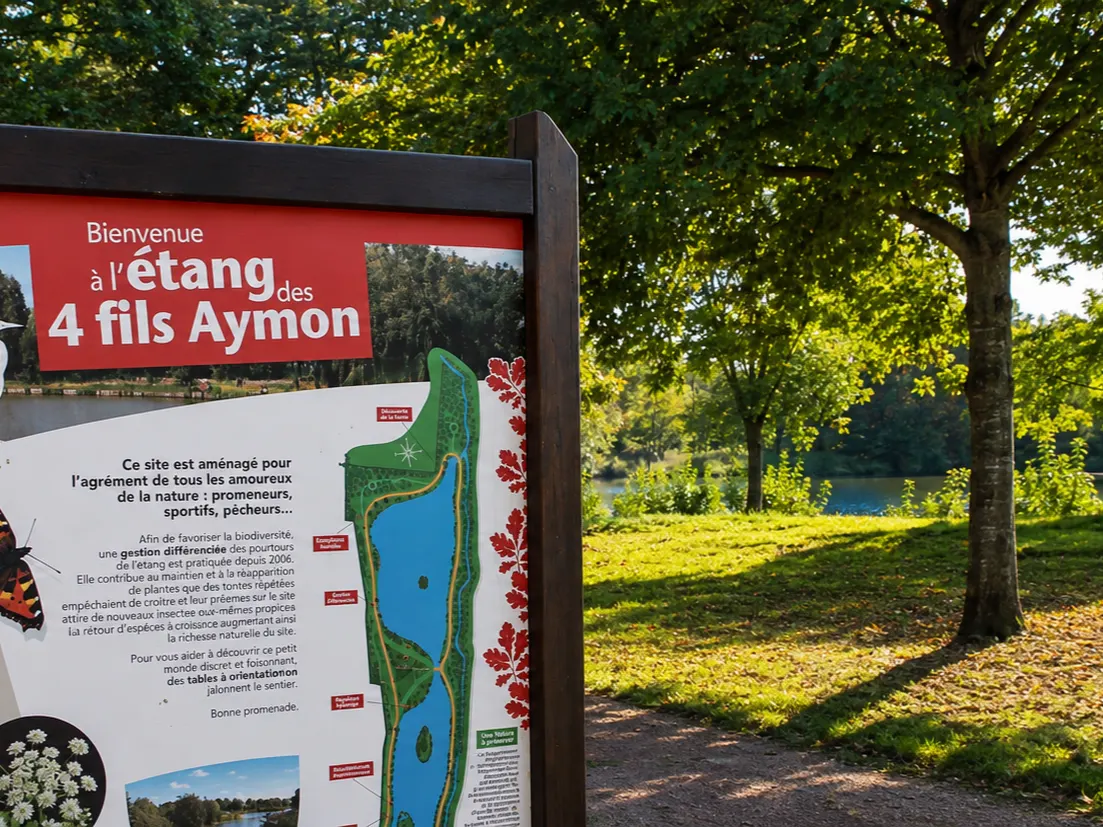
Just a few kilometres from Steenvoorde, the Quatre Fils Aymon Ponds offer a pleasant natural setting, perfect for relaxation and outdoor activities. A walking trail of approximately 1.5 km circles the ponds through a green landscape where visitors can observe the local wildlife and flora. The site also features a fitness trail, picnic areas and serves as the starting point for several hiking routes offering beautiful views of the Flanders Hills.
Bailleul, a Flemish Town Full of Character
Only a few kilometres from Steenvoorde, Bailleul charms visitors with its remarkable architectural heritage. Its UNESCO World Heritage Belfry, the Grand Place lined with elegant Neo-Flemish façades and the Benoît-De-Puydt Museum reflect the richness of the town's history. Bailleul's Carnival, celebrated during Shrove Tuesday, proudly features the famous giants Gargantua, Mélusine and Doctor Piccolissimo.
The Museum of Rural Life in Steenwerck
Located around twenty kilometres from Steenvoorde, the Museum of Rural Life in Steenwerck is a must-see attraction for anyone wishing to discover the traditions of Inland Flanders. Housed in a former Flemish farmhouse, the museum recreates everyday rural life through authentic period settings, traditional craft workshops, collections of historical objects and traditional folk games, offering visitors an immersive experience of the rural heritage of French Flanders.
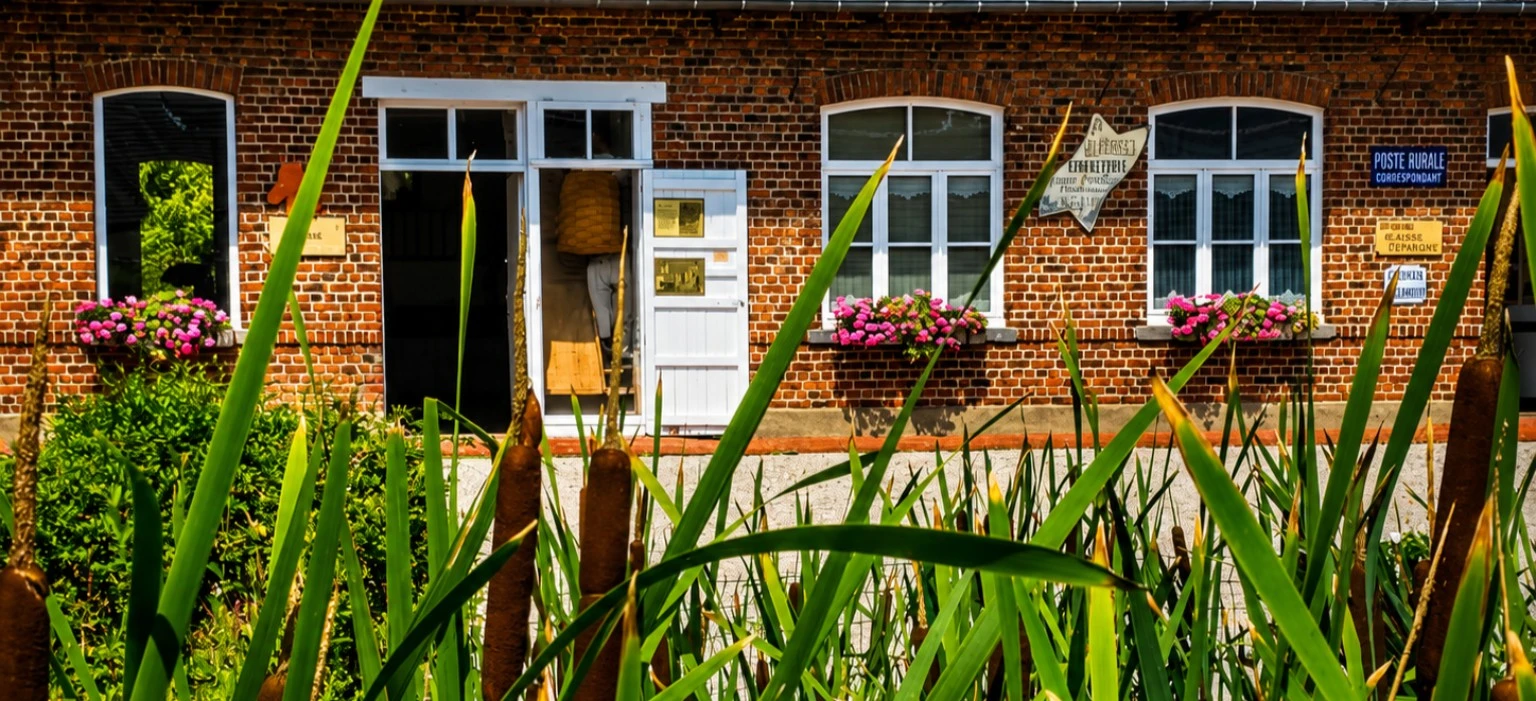
The Museum of Rural Life in Steenwerck invites visitors to discover everyday life in times gone by, at the heart of the French Flanders countryside.
Hazebrouck, the Capital of Inland Flanders
Located around fifteen kilometres from Steenvoorde, Hazebrouck is the economic and cultural heart of Inland Flanders. Its lively town centre, impressive Town Hall and Saint Eligius Church make it an essential stop for visitors. The town is also renowned for the Augustinians Museum, housed in a former convent and home to an outstanding collection of Flemish and regional art. Roland of Hazebrouck is the emblematic giant of the Mid-Lent Festival (Mi-Carême), one of the town's oldest traditional celebrations.
Bergues and its fortified heritage
The fortified town of Bergues is known for its remarkably well-preserved ramparts and its belfry, a UNESCO World Heritage Site. Its historic centre is an unmissable stop for anyone wishing to discover the history of Flanders.
Saint-Omer, the Marais Audomarois and the Romelaëre Nature Reserve
Near Steenvoorde, Saint-Omer charms visitors with its cathedral, its historic centre and the Marais Audomarois, a landscape shaped by human activity for over a thousand years. The Étangs du Romelaëre National Nature Reserve, situated in Clairmarais, offers the chance to observe exceptional biodiversity thanks to its footpaths, observation points and nature trails.
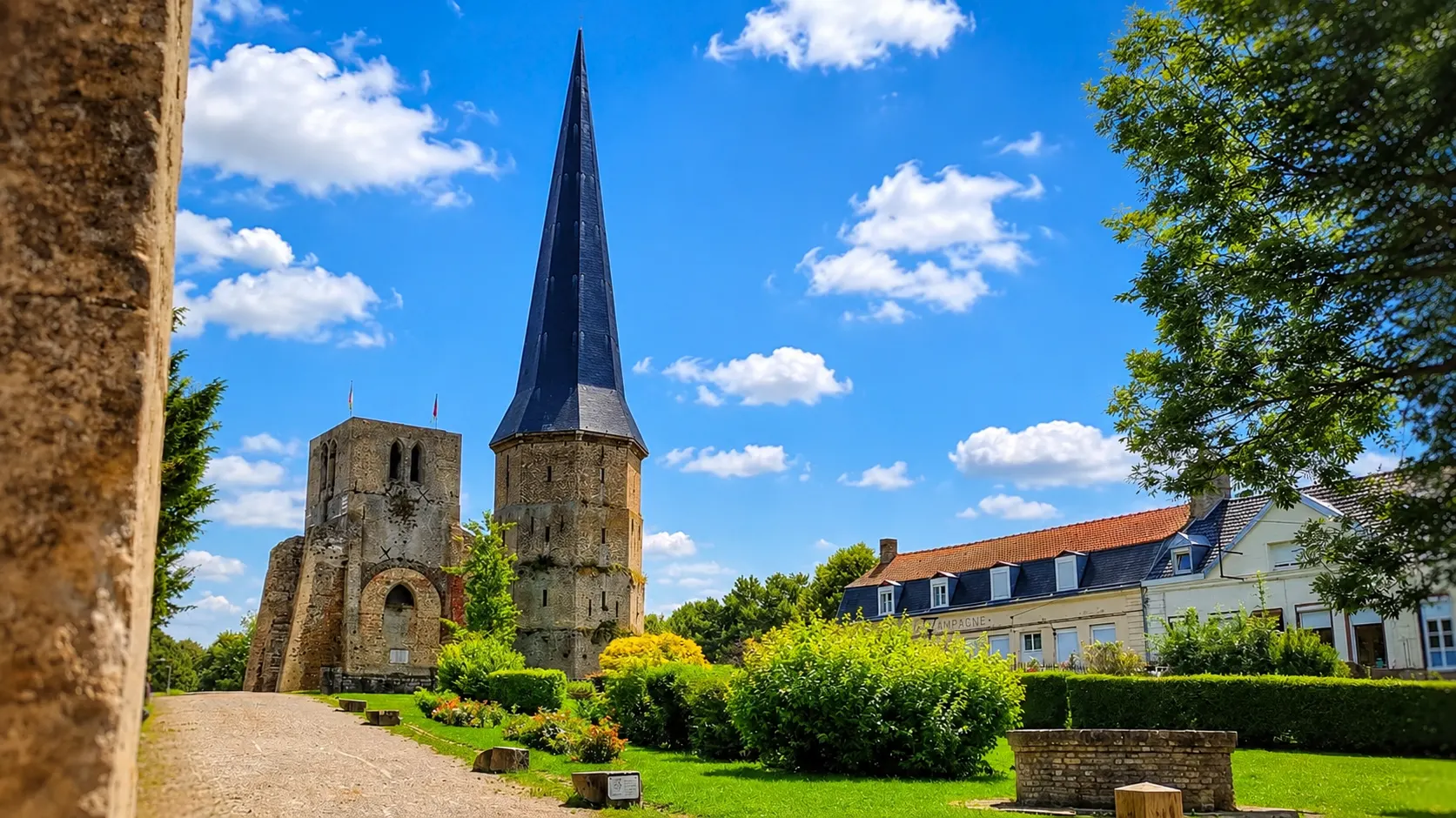
The ruins of the former Saint-Winoc Abbey and the belfry of Bergues form one of the most iconic landscapes of this Flemish town. With its blend of religious heritage, civil architecture and fortifications, Bergues is an unmissable stop on any tour of French Flanders.
Belgium just a stone’s throw away
Only a few kilometres from the Belgian border, Steenvoorde is an ideal base for exploring the treasures of Flanders. The cities of Ypres, Poperinge and Bruges are renowned for their remarkable heritage, world-famous brewing traditions and distinctive architecture, offering visitors an authentic immersion into Flemish culture.
Watou, the Village of Beer and Poetry
Just 8 km from Steenvoorde, on the Belgian side of the border, Watou is a charming Flemish village renowned for its heritage, breweries and peaceful atmosphere. Saint Bavo's Church dominates the village centre, surrounded by traditional Flemish houses. Watou is also famous for its Arts and Poetry Festival, which combines contemporary art and poetry in historic venues. Beer enthusiasts will enjoy visiting the St. Bernardus Brewery, whose beers are celebrated far beyond Belgium.
Poperinge, Belgium's Hop Capital
Only 25 minutes from Steenvoorde, Poperinge, Belgium's hop-growing capital, is home to the famous National Hop Museum. Housed in former hop warehouses, the museum traces the history of this iconic crop, from traditional harvesting methods to modern brewing techniques. Visitors can continue their exploration around the Grand Place, Saint Bertinus Church, local breweries and the surrounding hop fields that have made this Flemish town internationally renowned for its rich brewing heritage.
Nestled between lush hedgerows and stone walls, this cobbled path illustrates the unspoilt character of the historic paths of the Heart of Flanders. These typical routes invite you to take a stroll and offer a fresh perspective on the landscapes, heritage and authenticity of Flemish villages.
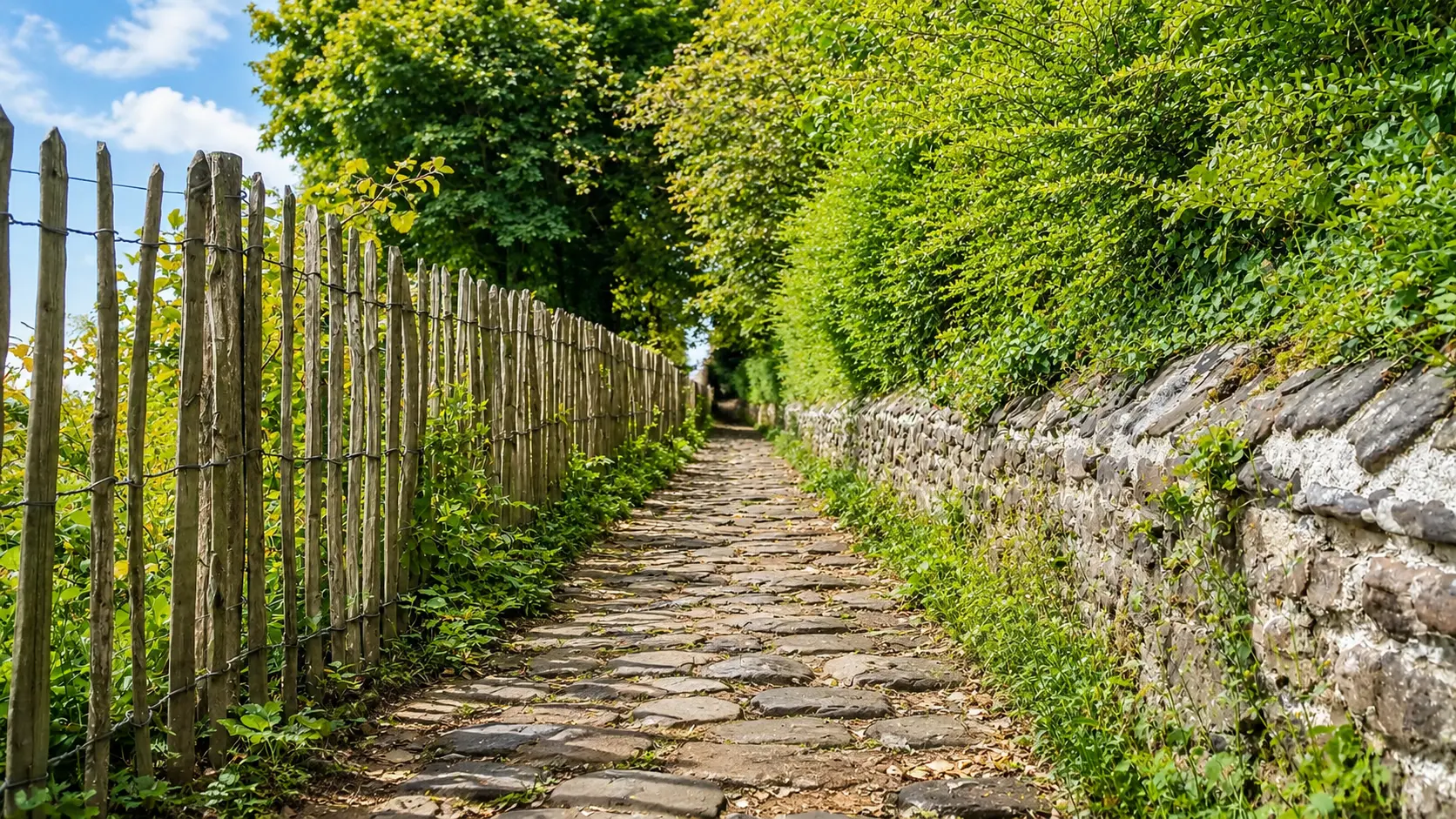
A cobbled path lined with hedges and traditional walls, reflecting the authentic charm of the historic paths of the Heart of Flanders.
Nature, walking and sustainable tourism
Whether on foot or by bike, the area around Steenvoorde offers numerous routes through the Monts de Flandre, along country lanes and through the typical landscapes of the Flemish countryside. Amidst hedgerows, chapels, mills and panoramic views, every walk reveals a new facet of the region.
Mont des Récollets Garden
Located on the road linking Steenvoorde and Cassel, the Mont des Récollets Garden is a popular stop for lovers of nature and heritage. Awarded the French Jardin remarquable label, it features Flemish-inspired gardens, topiary, colourful flower beds, and panoramic views over the Flanders Hills.
Why visit Steenvoorde?
Discover the famous Giants of the North
Explore the Monts de Flandre
Visit Cassel, one of the Most Beautiful Villages in France
Admire the Flemish windmills and local heritage
Make the most of the proximity to Bergues, Saint-Omer and Belgium
Experience the carnival traditions in the Heart of Flanders
Wander through unspoilt natural landscapes
Authentic, welcoming and deeply rooted in its traditions, Steenvoorde offers a unique immersion into the soul of French Flanders.
Continue your exploration of Steenvoorde
After exploring the town’s must-see sights, continue your visit with ‘The History of Steenvoorde’, ‘The Giants of Steenvoorde ’ and ‘The Steenvoorde Carnival’. You ’ll discover the history, traditions and heritage that make Steenvoorde and the Heart of Flanders so rich.

A website dedicated to the Giants of Steenvoorde, their history, their associations and the Summer Carnival.
© 2023 / 2026 – Steenvoorde and its Giants
Legal notices: Website hosted by planethoster.fr
Design: Pascal Cnockaert
Documentation and archives
The information presented on this website is based on public archives, historical publications, press articles, photographic collections, oral accounts and heritage resources relating to the history of Steenvoorde, its giants and its carnival.
Traduction automatique Deepl