
The hamlets of Steenvoorde: the living memory of the town
Beyond its town centre, Steenvoorde stretches across a vast rural area comprising several hamlets that play a vital part in shaping its identity. These living communities bear witness to the agricultural, craft and human history of Inner Flanders. Among the main hamlets are Ryveld, Saint-Laurent and Callicanes.
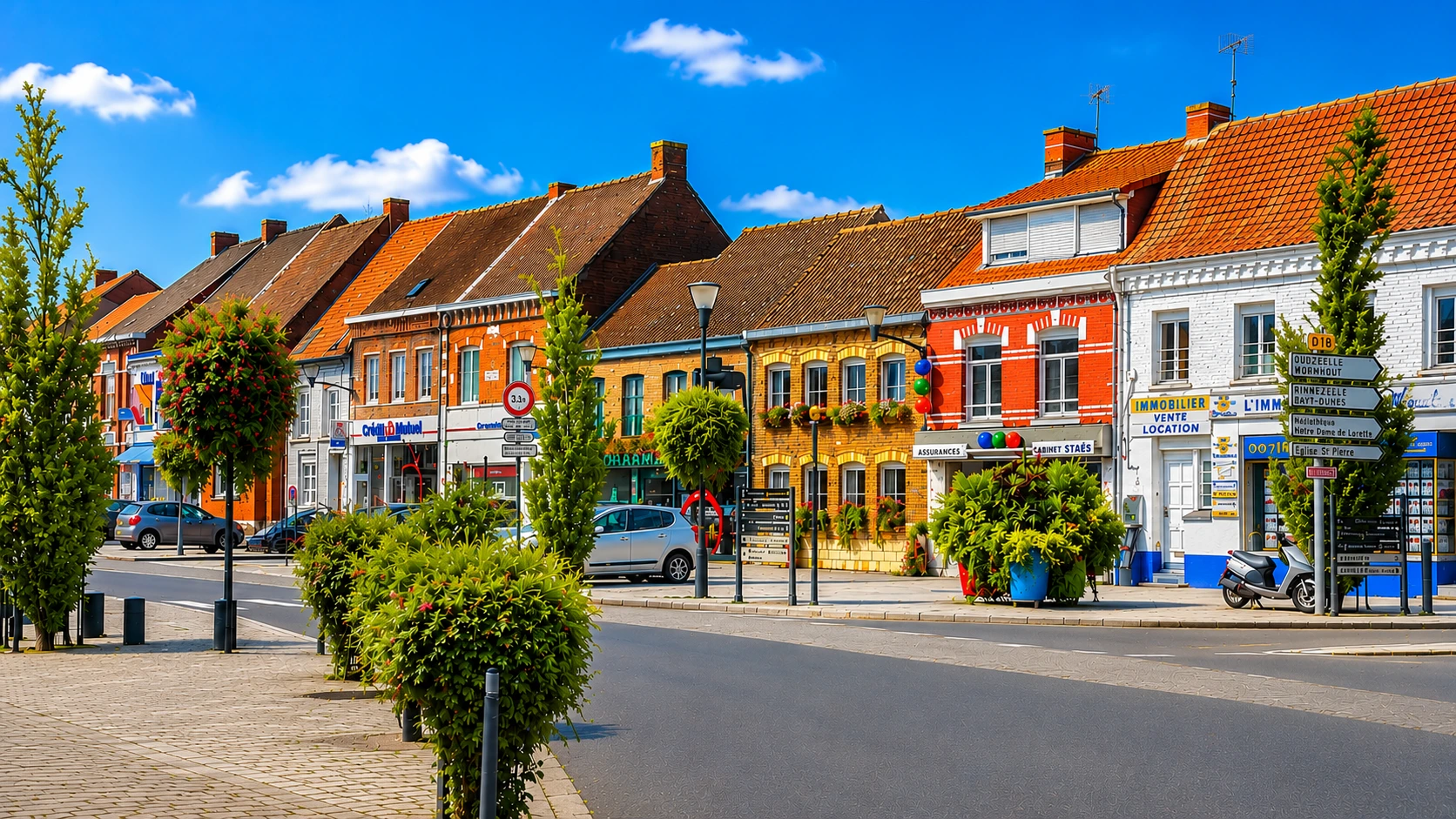
View of Steenvoorde’s square in the heart of Inner Flanders. Lined with traditional Flemish houses with colourful façades, this square is a lively hub and meeting place much loved by the locals. The flower beds and lush trees capture the pleasant atmosphere of a spring day in the village.
Le Ryveld
Located to the west of Steenvoorde, Ryveld is undoubtedly the best-known hamlet in the municipality. With its Flemish farmhouses, meadows and country lanes, it has preserved the rural character of the Steenvoorde countryside.
The Chapel
The Saint Rita and Saint Joseph Chapel is the hamlet's main place of worship. Built in brick in 1952 and inaugurated in 1953, it was established to meet the needs of residents living some distance from the parish church of Steenvoorde. Dedicated to Saint Rita and Saint Joseph, it remains one of the hamlet's best-known landmarks.
The School
The school is one of the hamlet's most emblematic buildings. Approved in 1866 and inaugurated in 1871, it was built thanks to a major public subscription involving the people of Steenvoorde, who contributed money, building materials and labour. The project also received a grant of 2,500 francs from the Ministry of Public Instruction during the Second French Empire under Napoleon III.
The school remained in use for many years before closing its doors. It still bears witness to the development of public education in rural France during the 19th century.
Today, the building hosts meetings, exhibitions, community activities and events organised by local associations. It remains an important witness to the hamlet's history and continues to play a role in community life.
Festive Heritage
Founded in 1991, the Les Amis du Ryveld association brings life to the hamlet by organising meetings and community events throughout the year.
In 1994, the association recreated Rosalie, a giant figure representing a milkmaid. Since then, she has become one of the symbols of the hamlet and of Steenvoorde's festive heritage.
Each year, the association also organises the Ryveld Ducasse, one of the major events in local community life.
Saint-Laurent
Located north of Steenvoorde, close to the border with Winnezeele, the hamlet of Saint-Laurent has preserved its rural character, with its Flemish farmhouses and extensive farmland. Its name recalls the former Carmelite convent of Saint-Laurent.
The hamlet is best known for this former convent, where the Beeldenstorm, also known as the Iconoclastic Fury, began. On 10 August 1566, following a Protestant sermon preached by Sebastiaan Matte, Jacques de Buyser led part of the congregation to the convent. There, the iconoclasts destroyed statues, religious images and objects used in Catholic worship. This event, recorded by contemporary chroniclers, is traditionally regarded as the starting point of the Beeldenstorm, which rapidly spread throughout the Low Countries.
The memory of the convent survives in historical sources: the eighteenth-century Cassini map still identifies the site as the "Convent des Carmes". A commemorative monument, inaugurated on 4 September 2016 to mark the 450th anniversary of the Beeldenstorm, commemorates this major event in European history.
Among the few surviving reminders of the history of the Saint-Laurent convent is a small bell, now preserved in Saint Peter's Church in Steenvoorde. After first being installed in the hospice, it was transferred to the church, where it remains today. It is a valuable part of the local heritage.
Saint-Laurent also remains a lively hamlet, notably thanks to its annual ducasse, which brings together residents and visitors for a friendly community celebration.
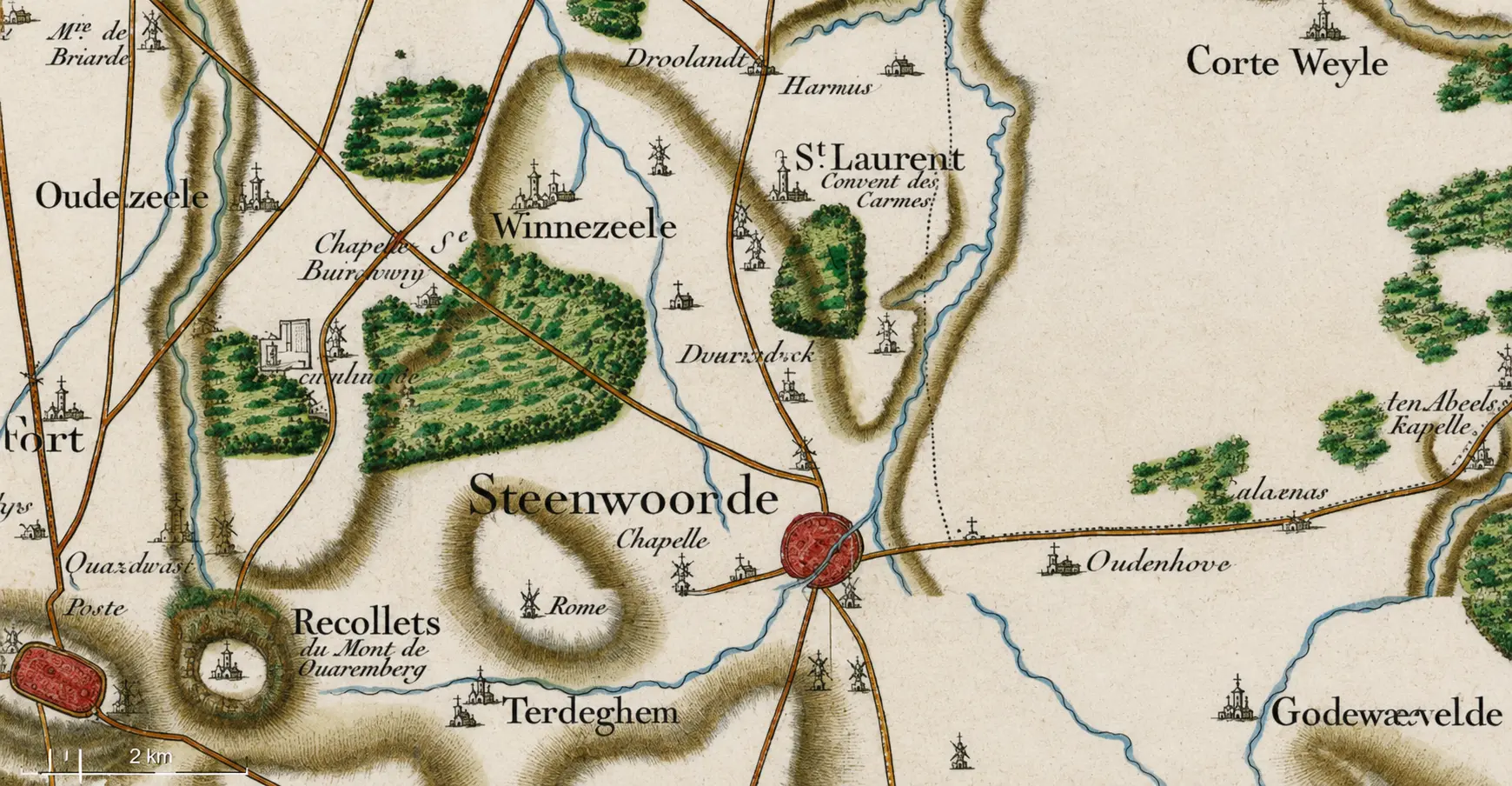
Extract from Cassini’s 18th-century map: the entry ‘St Laurent – Convent des Carmes’ locates the former Saint-Laurent priory to the north of Steenvoorde.
Callicanes
Situated to the west of Steenvoorde, on the Franco-Belgian border, the hamlet of Callicanes is divided between Steenvoorde, Godewaersvelde and Poperinge. Its location has long made it a place of transit and trade between French and Belgian Flanders.
Until the 1980s, customs checks were carried out mainly at Steenvoorde and Abele. In response to increasing road traffic, a new border post was established in Callicanes in the late 1980s. Having become one of the main crossing points between France and Belgium, it ceased operations in 1992 with the implementation of the European Single Market. The implementation of the Schengen Agreements in 1995 brought a definitive end to permanent border controls.
Today, Callicanes remains a symbol of cross-border trade and the historic links between the two sides of Flanders.
Localities at the heart of the Flemish landscape
Surrounding these hamlets are also several local place names whose names evoke local history: La Haute Roome, Les Ciseaux, La Queue de Vache, Le Saint-Éloi and La Warande. These names, often of Flemish or rural origin, bear witness to the long history of human settlement and the inhabitants’ attachment to their land.
Today, the hamlets of Steenvoorde play a vital role in the commune’s rich heritage. They stand as a living testament to Flemish rural history, where traditions, a sense of community and a deep attachment to the land continue to be passed down
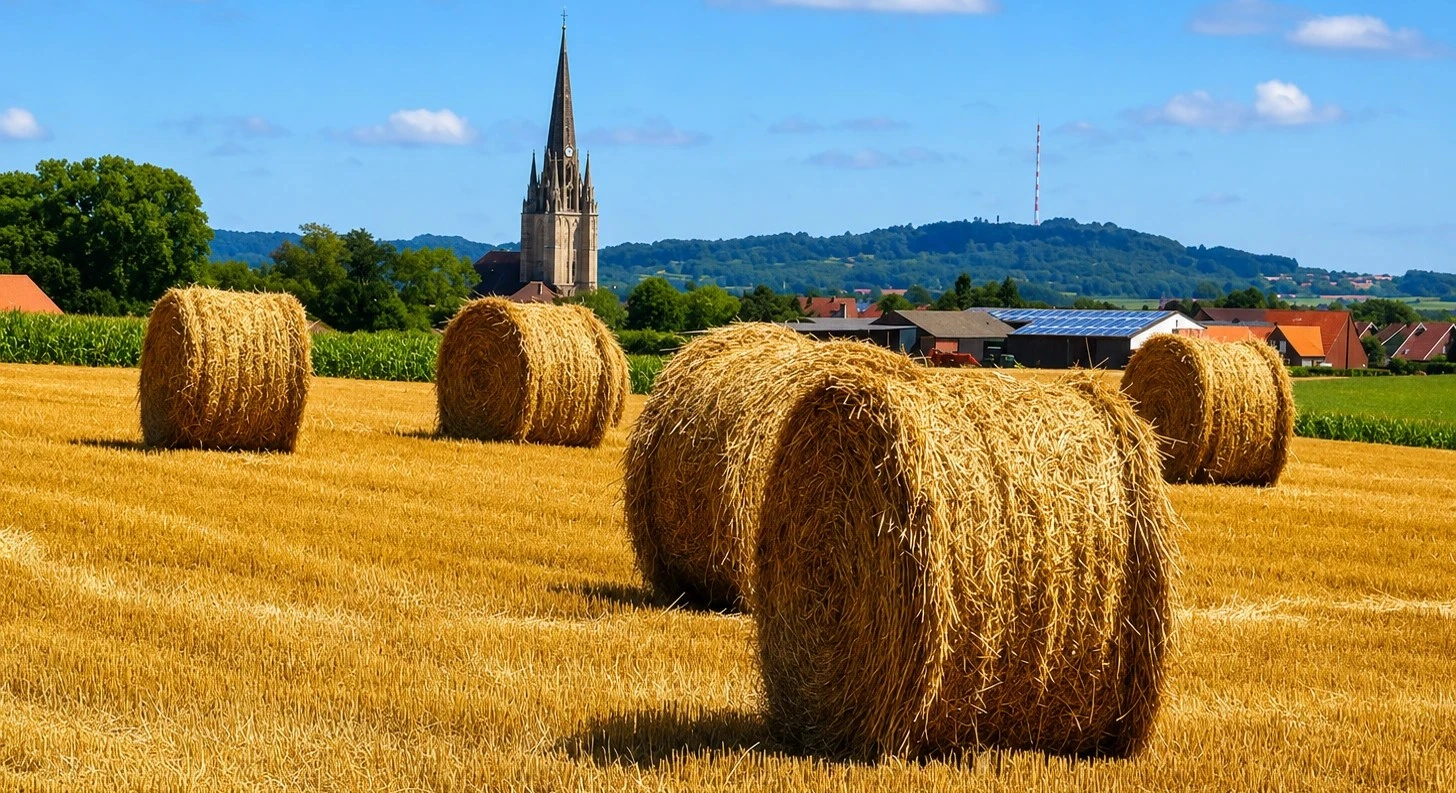
Steenvoorde (Nord) – A harvested field and sheaves of straw in the foreground, with the village church in the background. A scene typical of the agricultural landscapes of French Flanders.
Continue your visit
From hamlets to giants, from heritage to folk traditions, Steenvoorde reveals the full richness of the Heart of Flanders. Continue your exploration with ‘History of Steenvoorde’, ‘The Giants of Steenvoorde’, ‘The Steenvoorde Carnival’ and ‘Visiting Steenvoorde and the Monts de Flandre’ to discover the places and traditions that shape the town’s identity.

A website dedicated to the Giants of Steenvoorde, their history, their associations and the Summer Carnival.
© 2023 / 2026 – Steenvoorde and its Giants
Legal notices: Website hosted by planethoster.fr
Design: Pascal Cnockaert
Documentation and archives
The information presented on this website is based on public archives, historical publications, press articles, photographic collections, oral accounts and heritage resources relating to the history of Steenvoorde, its giants and its carnival.
Traduction automatique Deepl